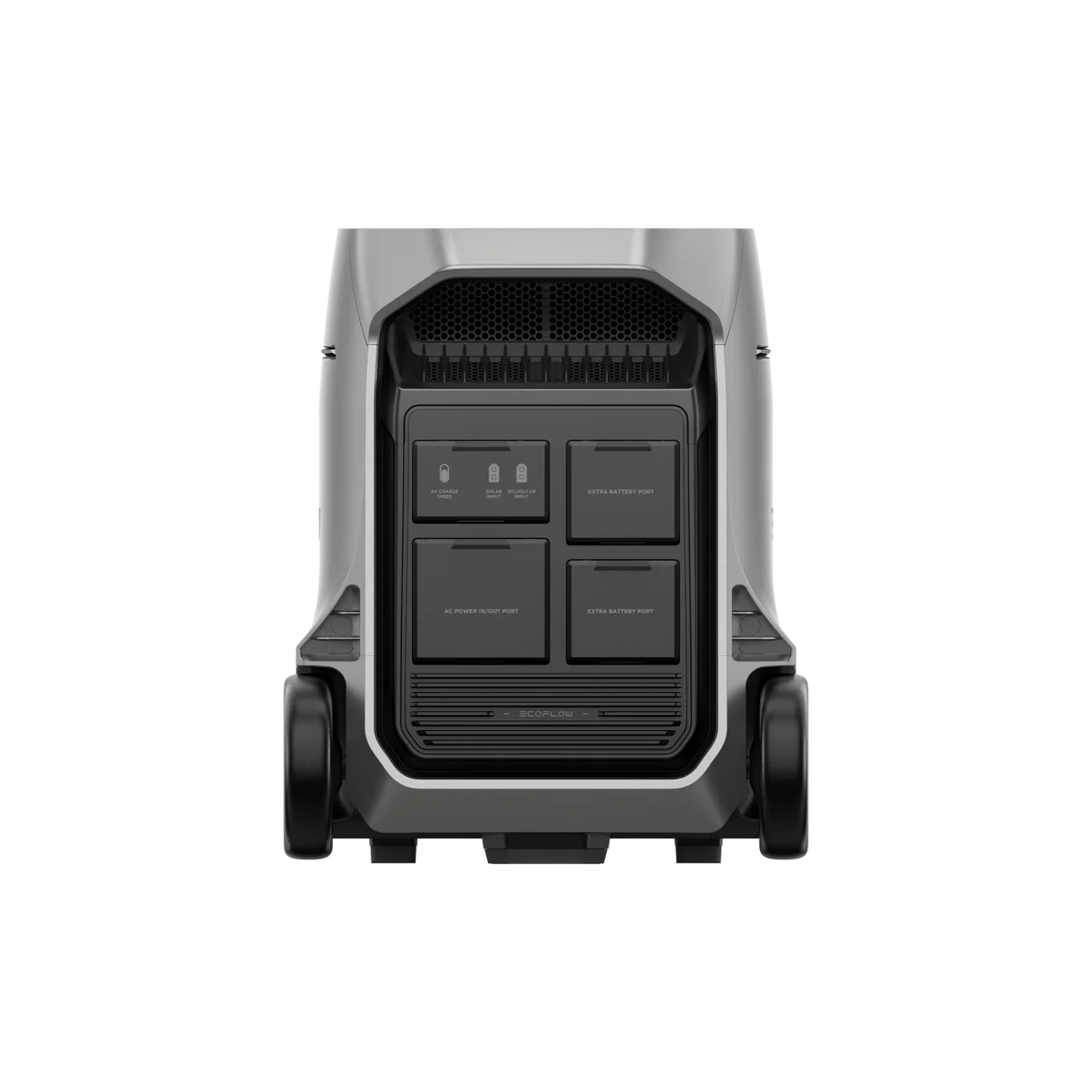
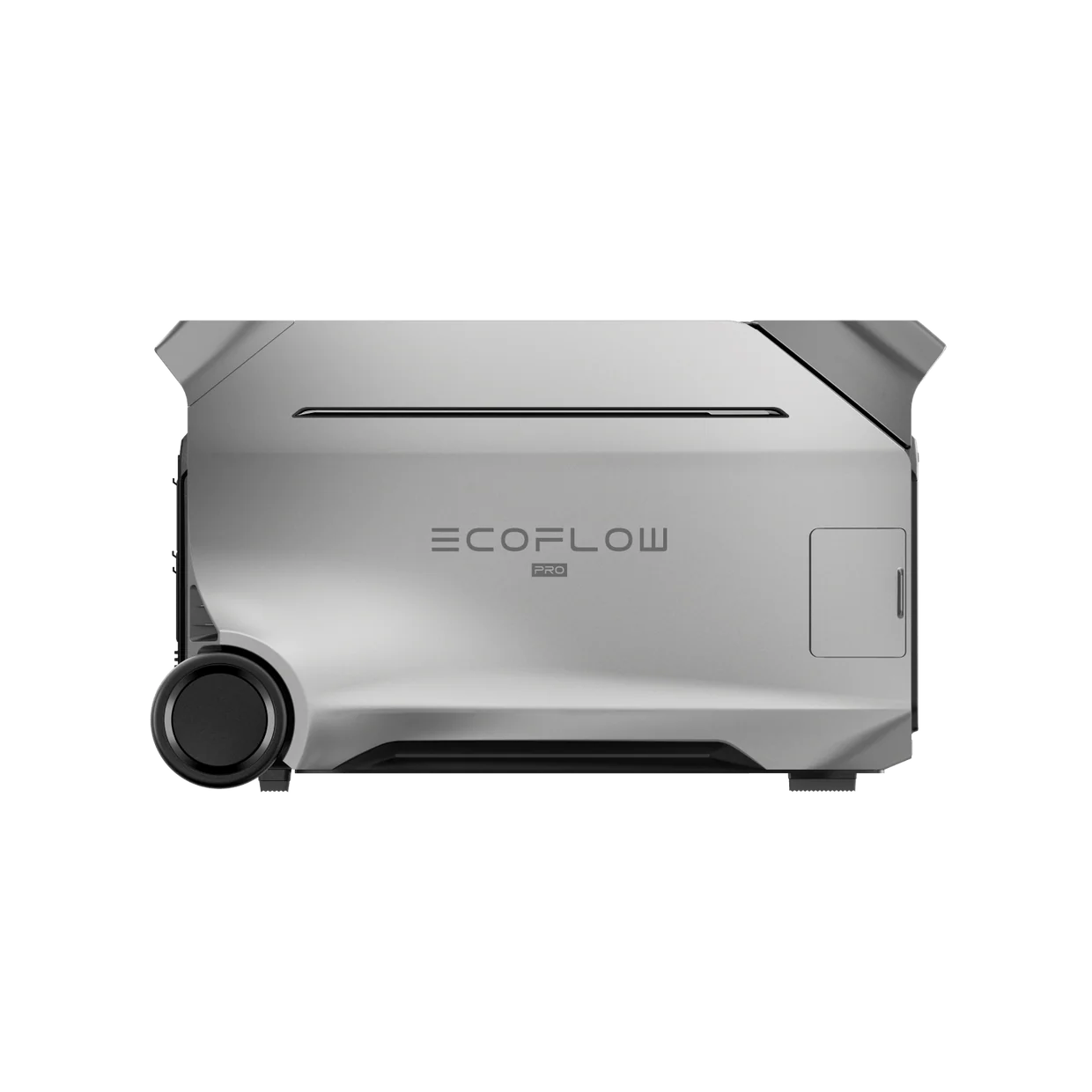
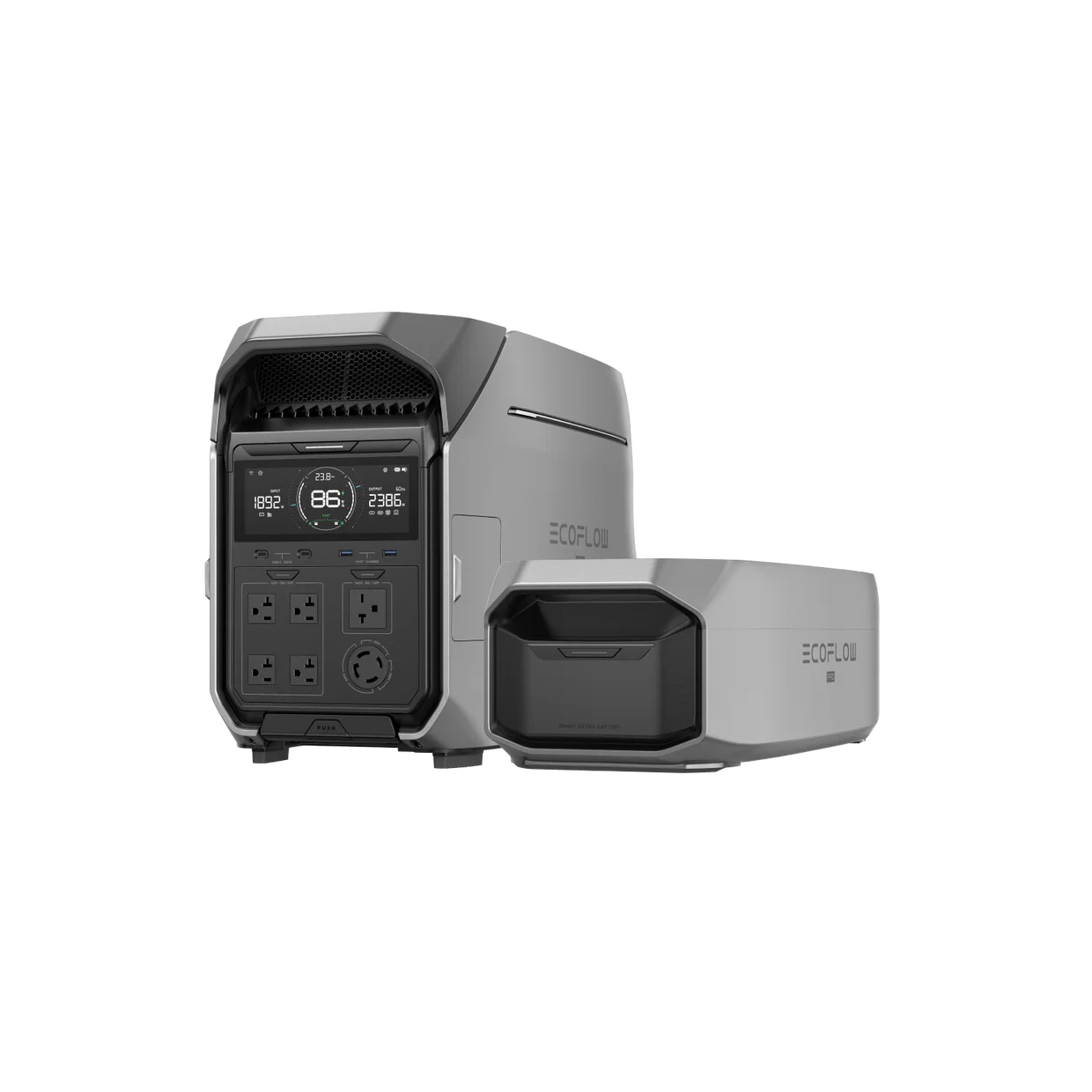
A portable power station can be useful for simple things like charging a phone or keeping a laptop running during a short outage. But when the power stays off for hours, your requirements quickly become more demanding. You may need to keep a refrigerator cold, maintain your internet connection, power essential lights, charge several devices, or run equipment that requires considerably more power than a small battery can provide.
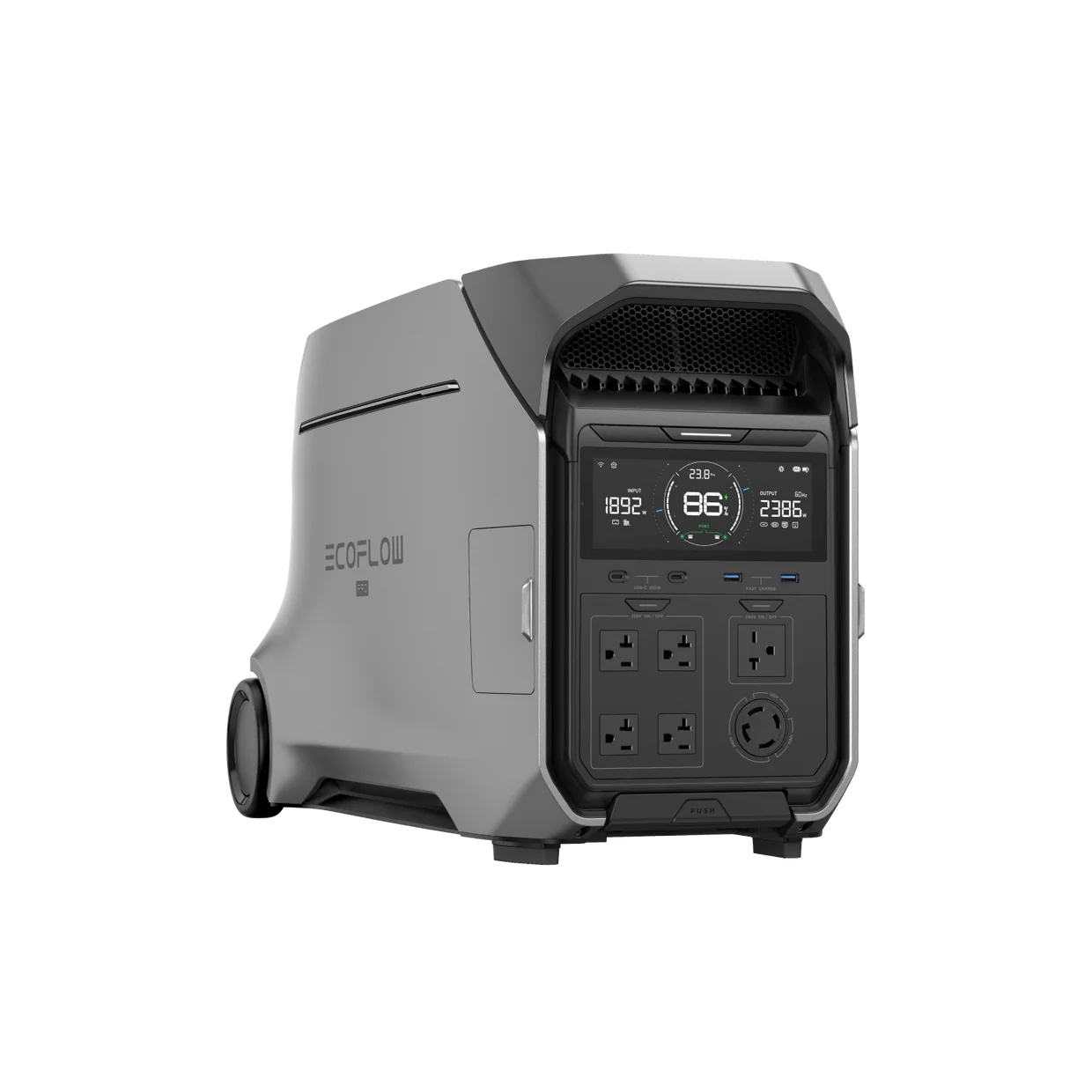
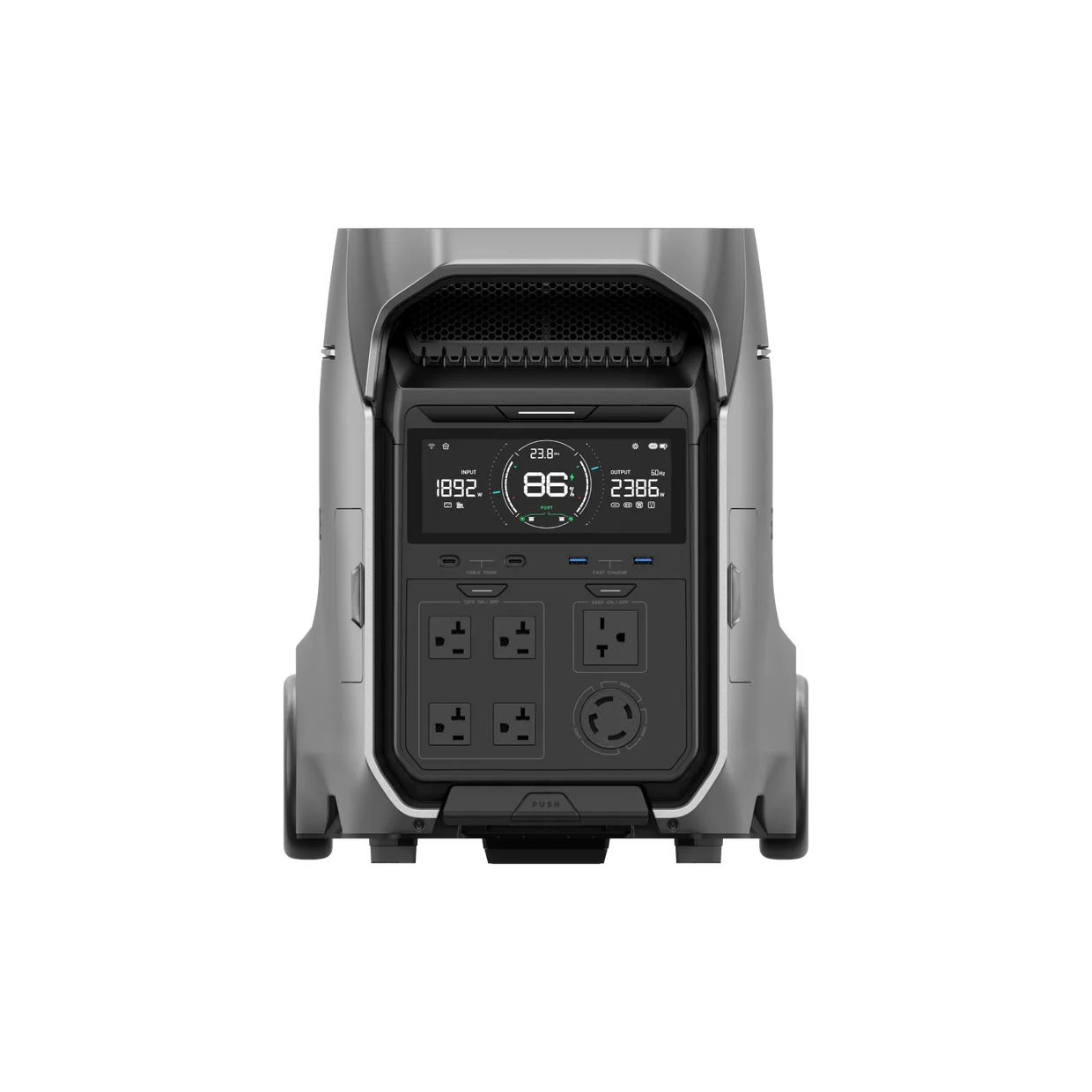
The EcoFlow DELTA Pro 3 is built for exactly this kind of situation. With a 4,096Wh LFP battery and up to 4,000W of continuous AC output, it sits firmly in the high-capacity category. It also supports 120V/240V output, up to 2,600W of solar input, UPS functionality, and expandable battery storage, giving it the flexibility to work as more than just an emergency battery.
But those numbers also come with a trade-off. The DELTA Pro 3 is a large machine weighing around 113.5 pounds, and its premium positioning means it isn’t aimed at casual users. So the important question isn’t simply whether it is powerful. It’s whether that power, capacity, and flexibility make sense for the way you actually intend to use it.
This review looks at the DELTA Pro 3 from that perspective, focusing on the features that matter when you’re choosing a serious backup-power system for your home, RV, workshop, or off-grid setup.
| Specification | EcoFlow DELTA Pro 3 |
|---|---|
| Battery Capacity | 4,096Wh |
| Battery Chemistry | LFP |
| Continuous AC Output | 4,000W |
| X-Boost | Up to 6,000W |
| Surge Output | Up to 8,000W |
| AC Output | 120V / 240V |
| Solar Input | Up to 2,600W |
| UPS | Up to 10ms |
| Cycle Life | 4,000 cycles to 80% capacity |
| Expandable Capacity | Up to 12kWh per unit |
| Weight | Approx. 113.5 lb |
| Warranty | 5 years |
The DELTA Pro 3 combines a large LFP battery with a powerful inverter and several charging options. That makes it considerably different from smaller portable power stations designed mainly for personal electronics.
The important thing is how these specifications work together. The 4,096Wh capacity determines how much stored energy is available, while the 4,000W inverter determines how much power you can draw at once. Solar input gives you a way to replenish the battery, and the expandable design lets you increase storage if the base capacity isn’t enough.
That combination makes the DELTA Pro 3 particularly interesting for serious backup applications.
The best way to understand the DELTA Pro 3 is to think of it as a portable energy system, rather than simply a large battery.
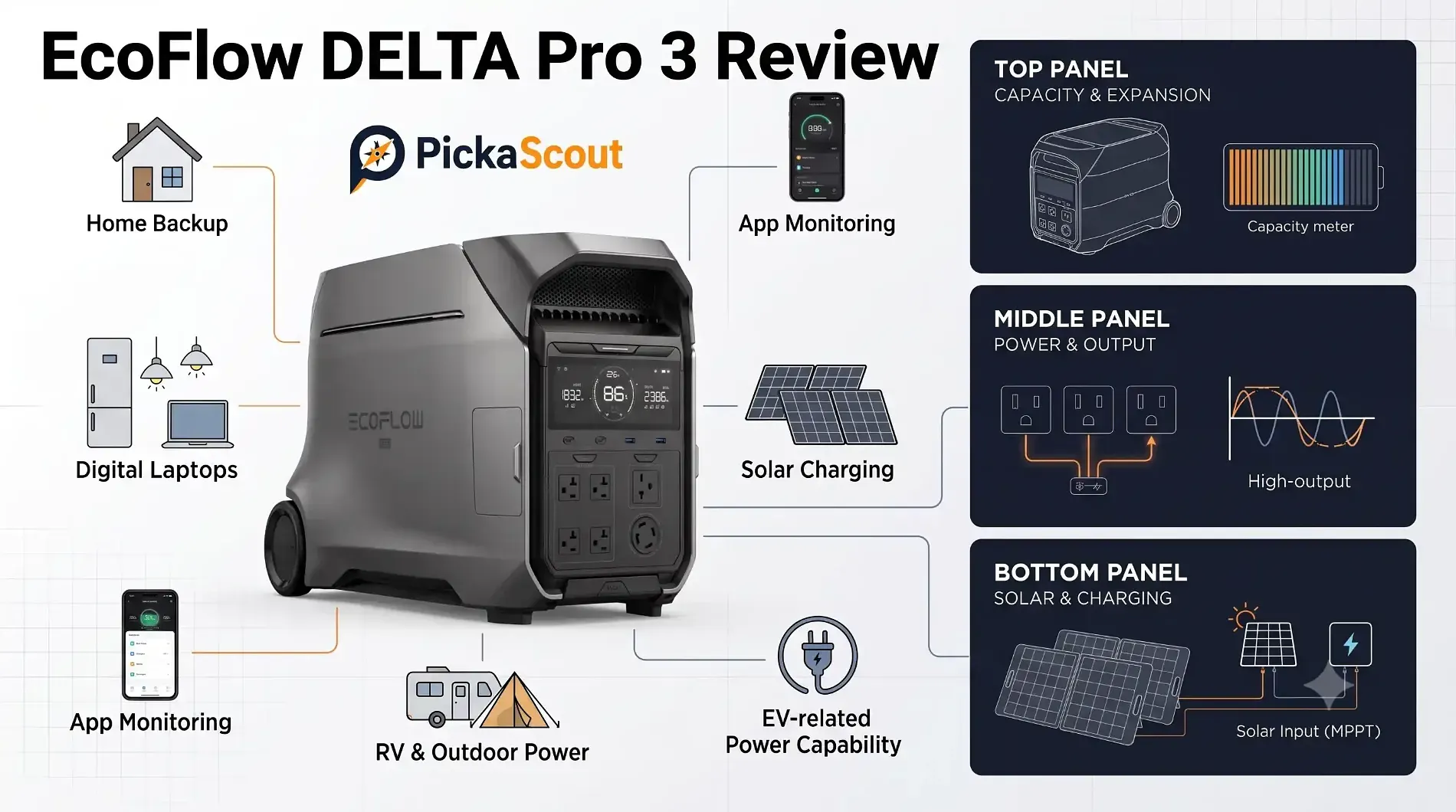
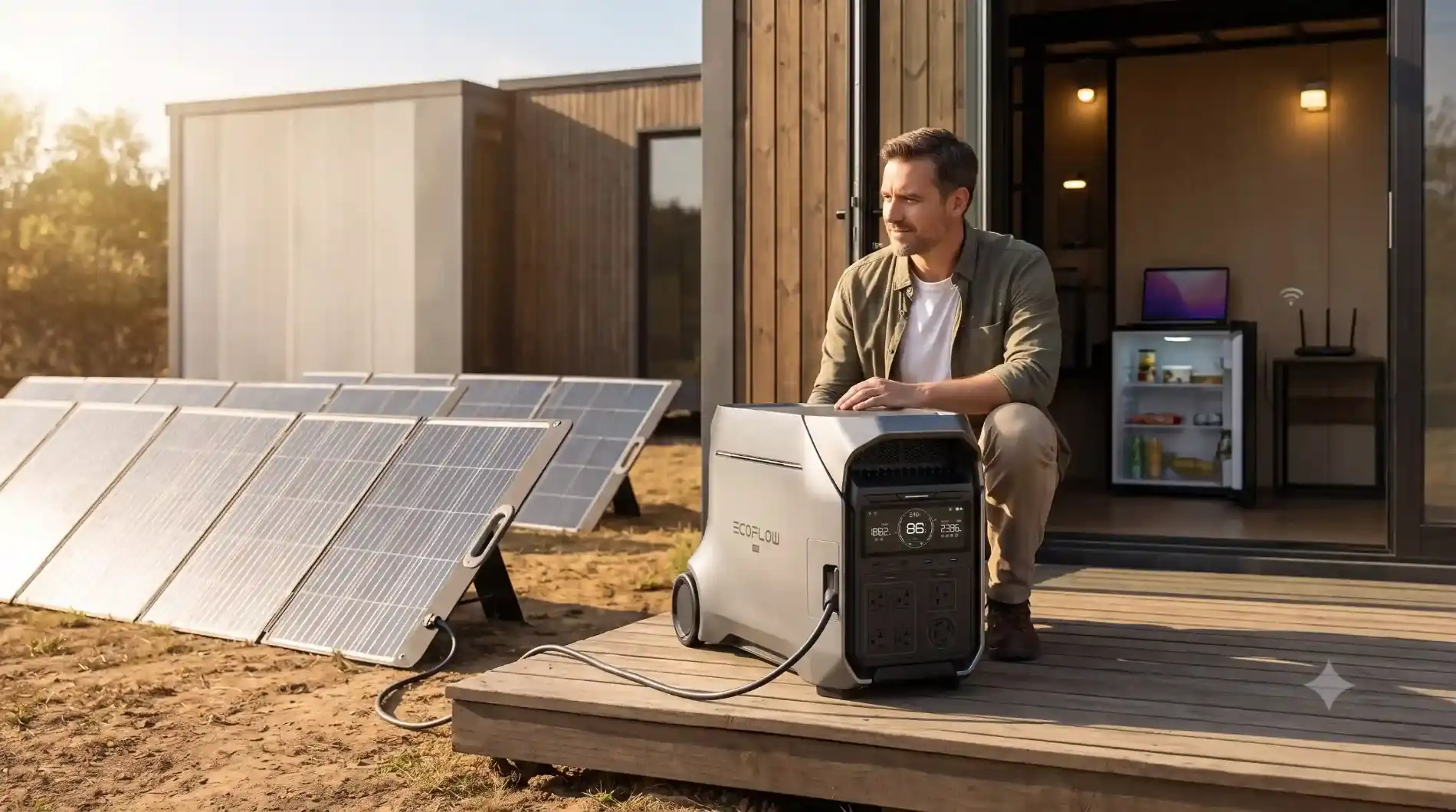
For a homeowner, it can provide backup electricity during an outage without the fuel, exhaust, and engine noise associated with a conventional generator. For an RV owner, the large battery and dedicated RV output can provide more freedom away from shore power. For off-grid users, solar charging and expandable storage make it possible to build a larger energy system around the main unit.
That versatility is one of its biggest advantages. You can use the DELTA Pro 3 as a standalone power station, then add compatible batteries later if your requirements increase.
However, this flexibility also means it isn’t automatically the right choice for everyone. If your typical use is charging phones, cameras, laptops, and a few lights while camping, a smaller power station will probably be easier to carry and much cheaper.
The DELTA Pro 3 starts making sense when you need high output, substantial stored energy, or the ability to expand your system over time.
The DELTA Pro 3 stores 4,096Wh of energy in an LFP battery. That’s a substantial amount for a portable power station, but the number needs to be understood in context.
Battery capacity tells you how much energy is stored; it doesn’t guarantee how long a particular appliance will run. A refrigerator, for example, doesn’t normally consume its maximum power continuously because its compressor cycles on and off. A laptop and Wi-Fi router may consume relatively little energy, while an electric heater can use a large amount of energy in a short period.
For that reason, the most useful way to judge the DELTA Pro 3’s capacity is to think about your essential loads.
During an outage, running a refrigerator, router, LED lighting, laptop, phones, and other small electronics is a very different scenario from running electric heating, cooking appliances, and air conditioning continuously.
The 4,096Wh battery gives you a strong reserve, but your actual runtime will always depend on the devices connected to it and how much energy they consume.
The battery tells you how much energy you have. The inverter tells you how much power you can use at one time.
EcoFlow rates the DELTA Pro 3 for up to 4,000W of continuous AC output, with X-Boost support for certain compatible loads up to 6,000W and surge capability up to 8,000W.
A 4,000W continuous rating gives you considerable headroom for running multiple appliances at once. Instead of worrying about a refrigerator, computer, router, lights, and other moderate loads exceeding the limits of a smaller power station, the DELTA Pro 3 provides substantially more room.
Still, buyers should understand the difference between the three ratings. The normal continuous output is 4,000W. X-Boost is designed to help with certain high-wattage appliances, while the 8,000W figure relates to short-duration surge requirements.
In other words, the DELTA Pro 3 is powerful, but you should still check the running and startup requirements of the equipment you plan to connect.
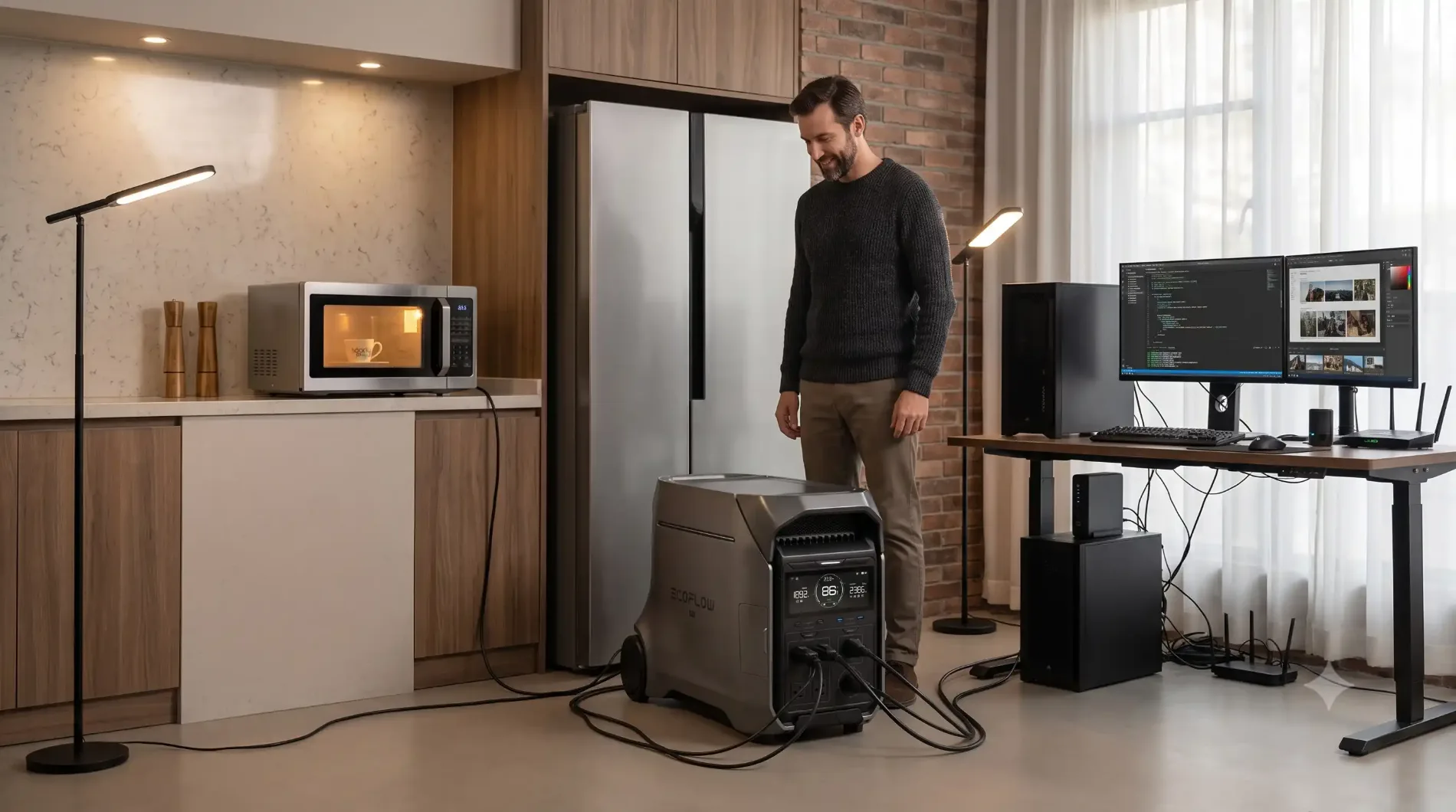
The DELTA Pro 3’s 120V/240V capability is another feature that separates it from many smaller portable power stations.
Most household electronics use standard 120V power, so refrigerators, televisions, computers, networking equipment, lighting, and chargers fall into the familiar category. The 240V capability becomes more useful for certain higher-demand equipment and applications where standard 120V output isn’t sufficient.
EcoFlow also provides a 30A RV outlet alongside multiple AC outlets, USB connections, and DC outputs. That makes the DELTA Pro 3 adaptable to different environments rather than limiting it to one particular type of use.
There are specific operating limitations around the 120V/240V modes, so anyone planning a more complex electrical installation should understand EcoFlow’s supported configuration before connecting equipment. For direct plug-in use, however, the range of available outputs is a major strength.
The DELTA Pro 3’s 120V/240V capability is another feature that separates it from many smaller portable power stations.
Most household electronics use standard 120V power, so refrigerators, televisions, computers, networking equipment, lighting, and chargers fall into the familiar category. The 240V capability becomes more useful for certain higher-demand equipment and applications where standard 120V output isn’t sufficient.
EcoFlow also provides a 30A RV outlet alongside multiple AC outlets, USB connections, and DC outputs. That makes the DELTA Pro 3 adaptable to different environments rather than limiting it to one particular type of use.
There are specific operating limitations around the 120V/240V modes, so anyone planning a more complex electrical installation should understand EcoFlow’s supported configuration before connecting equipment. For direct plug-in use, however, the range of available outputs is a major strength.
The other major advantage is the ability to increase storage. EcoFlow supports compatible extra batteries, allowing a single DELTA Pro 3 system to expand up to 12kWh.
That means you don’t necessarily have to purchase your maximum capacity on day one. You can start with the base unit, see how it performs for your needs, and add storage later if longer runtime becomes important.
For a homeowner preparing for increasingly long outages, or an off-grid user gradually building a larger system, this upgrade path can be valuable.
The trade-off is cost and size. Additional batteries increase both the total investment and the physical footprint, so expansion should be based on actual energy requirements rather than simply the fact that the system supports it.
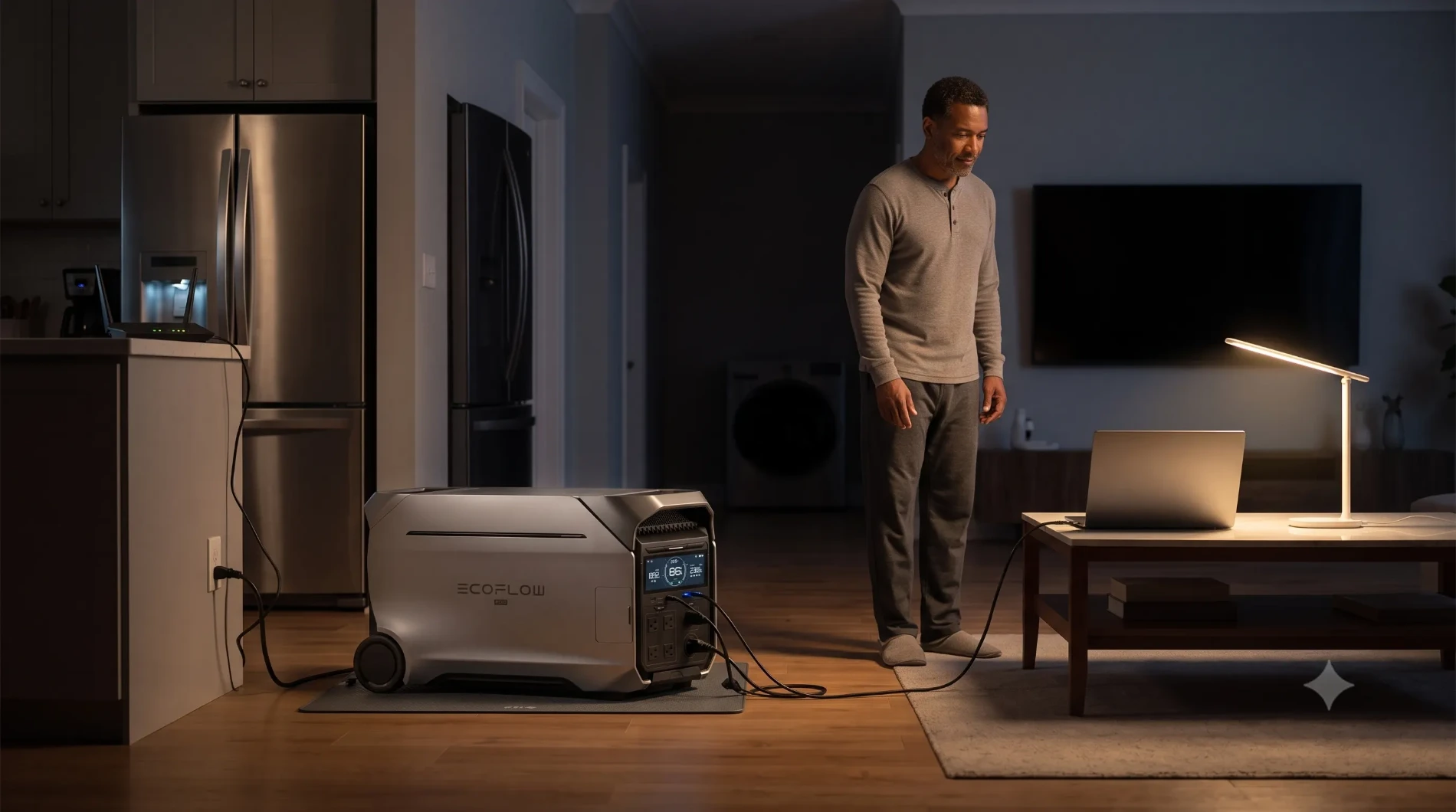
For home backup, the DELTA Pro 3’s combination of battery capacity and inverter output is arguably its strongest selling point.
Instead of restricting backup power to phones and laptops, you can build a more useful emergency load around essential household equipment. A refrigerator, Wi-Fi router, lighting, computers, televisions, chargers, and other electronics can all become part of the backup plan, provided their combined requirements remain within the system’s capabilities.
The important distinction is that this is managed backup power, not unlimited whole-home electricity.
A 4,096Wh battery can provide meaningful protection during an outage, but high-energy appliances can consume that stored energy quickly. If you try to operate every appliance exactly as you normally would, the battery may not last nearly as long as expected.
A better strategy is to prioritize the loads that matter most and use high-power appliances selectively. That allows the available energy to stretch further and makes better use of what the DELTA Pro 3 is designed to provide.
For homeowners who need longer coverage, adding extra batteries and solar generation can turn the system into a considerably more capable backup solution.
The DELTA Pro 3 is clearly designed for people who need more than a basic portable battery. Its 4,096Wh LFP battery, 4,000W inverter, 120V/240V support, solar charging capability, and expandable storage give it the foundation of a serious portable backup system.
Its biggest limitation is equally obvious: this is a large and heavy product. At around 113.5 pounds, it is better thought of as a power system that can be moved when necessary than a lightweight battery you carry everywhere.
That distinction will matter throughout the rest of this review.
For home backup, RV use, and off-grid applications, the capabilities make sense. For basic camping and small electronics, they’re probably excessive.
The next section of the review looks at what happens beyond the specification sheet—charging speed, noise, UPS performance, app control, portability, RV use, and real-world operation during an outage. Those are the factors that ultimately determine whether the DELTA Pro 3 is merely powerful on paper or genuinely useful in everyday life.
A power station can have impressive specifications and still be frustrating to live with. Once you move beyond battery capacity and inverter output, everyday factors such as charging speed, operating noise, controls, portability, and reliability become much more important.
This is where the DELTA Pro 3 starts to show why it belongs in the high-end portable power category. It is designed to handle substantial electrical loads while giving users several ways to recharge and monitor the system.
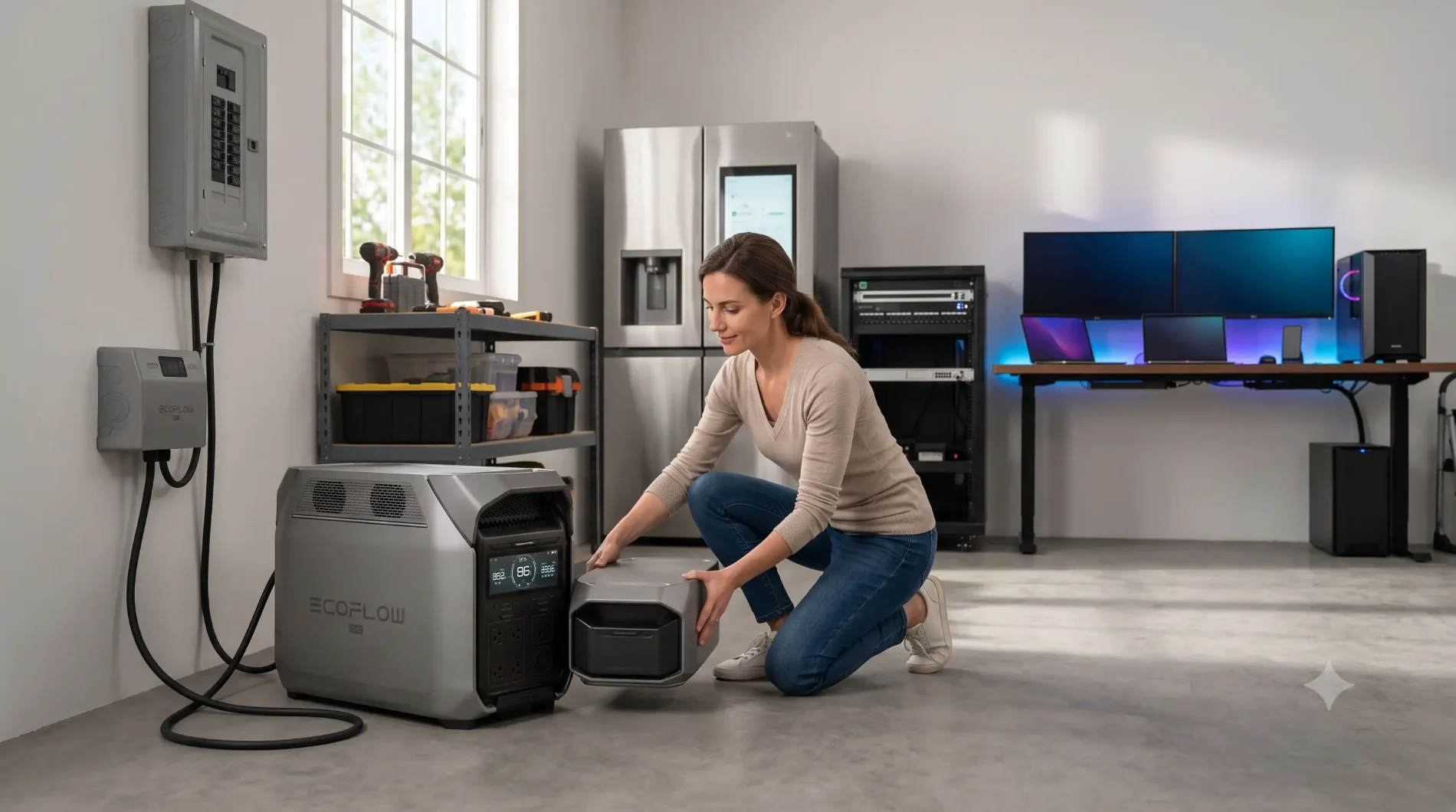
The DELTA Pro 3 supports up to 2,900W of AC charging under suitable conditions. That’s important because a large battery is only useful if you can replenish it in a reasonable amount of time.
For example, after using a significant portion of the battery during an overnight outage, fast AC charging can help get the system ready again once grid power returns. Instead of treating the power station as something that takes most of a day to recover, you can get a much shorter recharge window when the appropriate charging setup is available.
This is especially useful for households that experience repeated outages. You may use the battery one evening, recharge it when electricity returns, and have it available again for another interruption.
AC charging is useful when the grid is available. During an extended outage, solar becomes much more important.
With support for up to 2,600W of solar input, the DELTA Pro 3 can work with a substantial solar array. The battery can provide power overnight or during poor weather, while solar production during daylight hours can help replenish what you’ve consumed.
The actual amount of energy you’ll recover from solar depends heavily on conditions. A panel array rarely produces its maximum rated output continuously, so buyers should plan around realistic daily solar production rather than assuming the 2,600W maximum will be available throughout the day.
Still, the high solar-input capability makes the DELTA Pro 3 particularly interesting for users who want backup power that can continue operating beyond the first battery cycle.

For people working from home, the UPS function can be one of the DELTA Pro 3’s most practical features.
EcoFlow specifies a transfer time of up to 10ms. When connected appropriately, the system can automatically provide backup power when the grid supply is interrupted, helping compatible equipment remain powered through short outages.
That can be useful for a desktop computer, monitor, Wi-Fi router, networking equipment, or other electronics where an unexpected shutdown can interrupt work or cause data loss.
Instead of waiting for the power to go out and then connecting a portable battery, the DELTA Pro 3 can already be positioned as part of your backup setup.
It isn’t necessarily a replacement for every specialized enterprise UPS, but for a home office and everyday electronics, this functionality adds another layer of usefulness.
The DELTA Pro 3 can also be monitored and managed through EcoFlow’s smartphone app.
This becomes more useful as the system gets more complicated. You can monitor battery status, check power consumption, and manage supported settings without constantly walking over to the unit.
During an outage, that information can help you make better decisions. If you notice that your current loads are consuming more energy than expected, you can reduce unnecessary usage before the battery gets critically low.
For a system that may be stored in a garage, utility area, RV, or another location away from your living space, remote monitoring is a practical feature rather than just a technology gimmick.
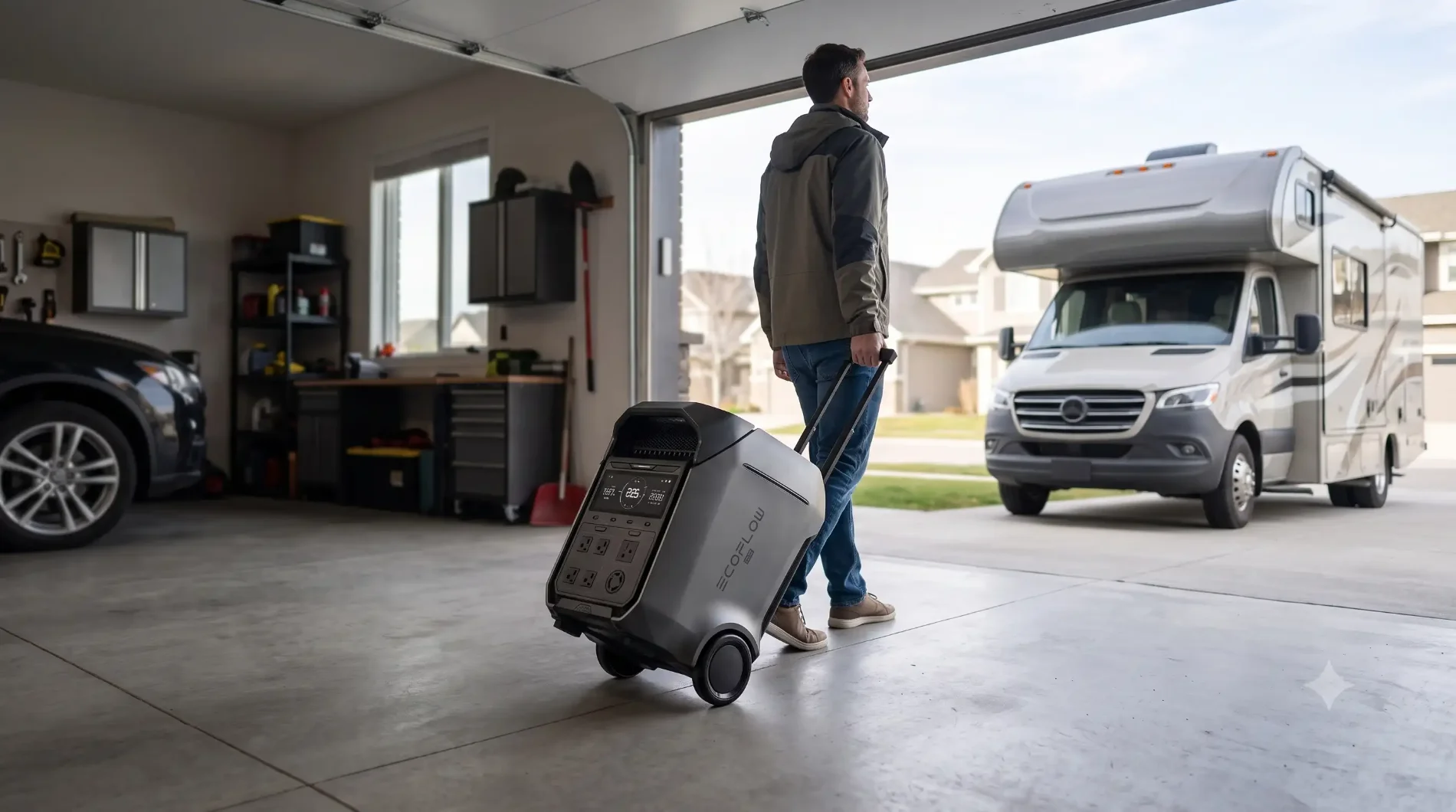
The word “portable” needs some qualification here.
At approximately 113.5 pounds, the DELTA Pro 3 is not something most people will want to carry around. Its wheels and handles make it considerably easier to move across suitable surfaces, but the weight is still substantial.
That means it works best when you plan where it will be used.
A homeowner might keep it in a garage and roll it into position when needed. An RV owner may load it once before a trip and leave it in place. A workshop user may move it around the workspace when required.
This is portable power in the sense that the system can be relocated without permanent installation. It is not lightweight portable power.
That distinction is important when comparing the DELTA Pro 3 with smaller units designed specifically for backpacking or lightweight camping.
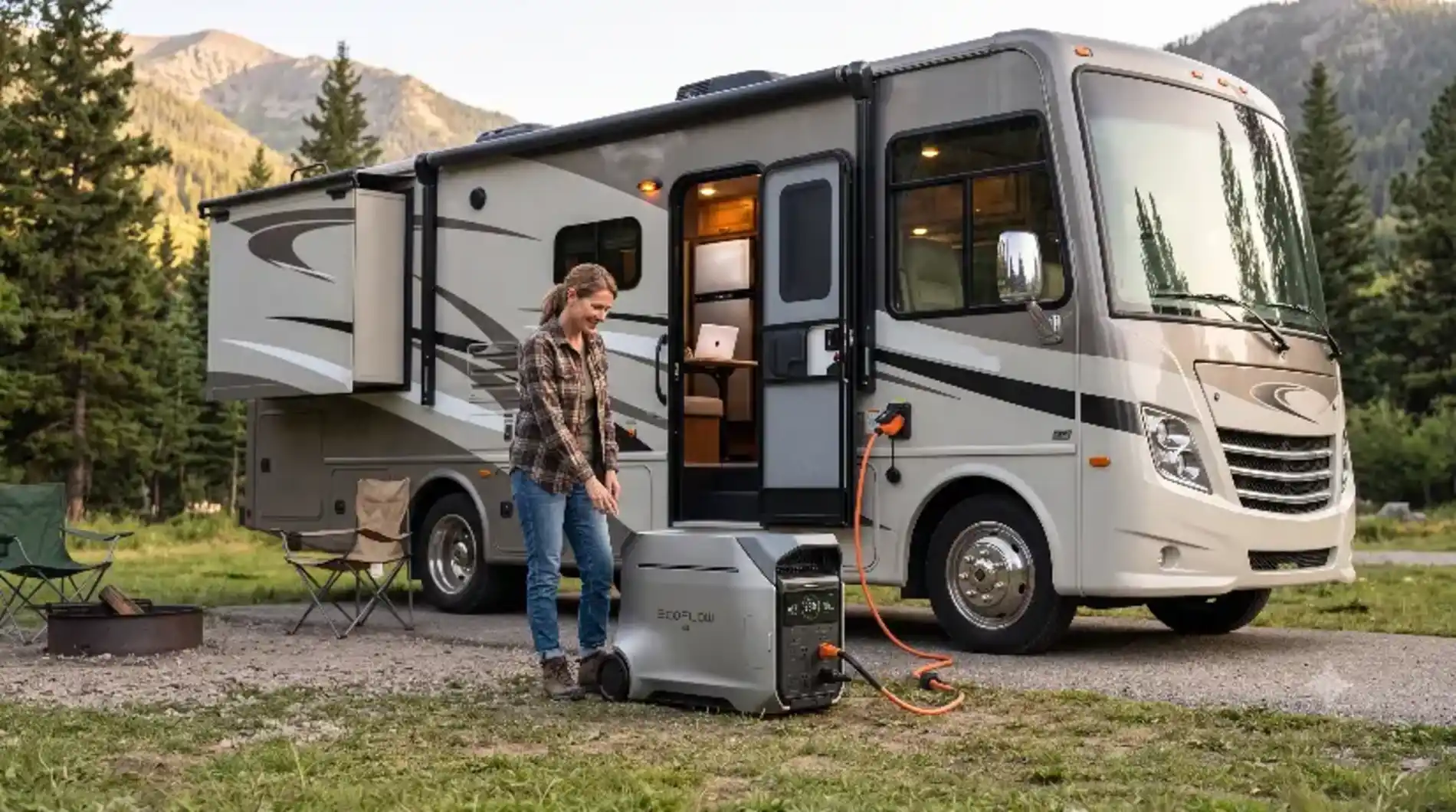
The DELTA Pro 3 is particularly well suited to larger RV setups.
Its substantial battery gives you more stored energy for refrigeration, lighting, electronics, and other equipment, while the dedicated 30A RV connection makes integration more convenient for compatible RV systems.
Solar charging can also make a major difference when you’re traveling away from campground hookups. During the day, solar panels can replenish the battery, allowing you to use stored energy later when the sun isn’t available.
For a weekend trip with very modest electrical requirements, however, the DELTA Pro 3 may be excessive. Its size and weight make much more sense for RV owners who regularly spend extended periods away from shore power.
This is where the DELTA Pro 3’s overall design becomes easier to appreciate.
Imagine a storm knocks out power in the evening. Your refrigerator needs to stay cold, the Wi-Fi router needs to remain operational, several lights are on, and someone is using a laptop.
The goal isn’t necessarily to power your entire home without restrictions. Instead, the DELTA Pro 3 gives you enough output and stored energy to prioritize important loads without constantly worrying about whether a modest combination of devices will overload the system.
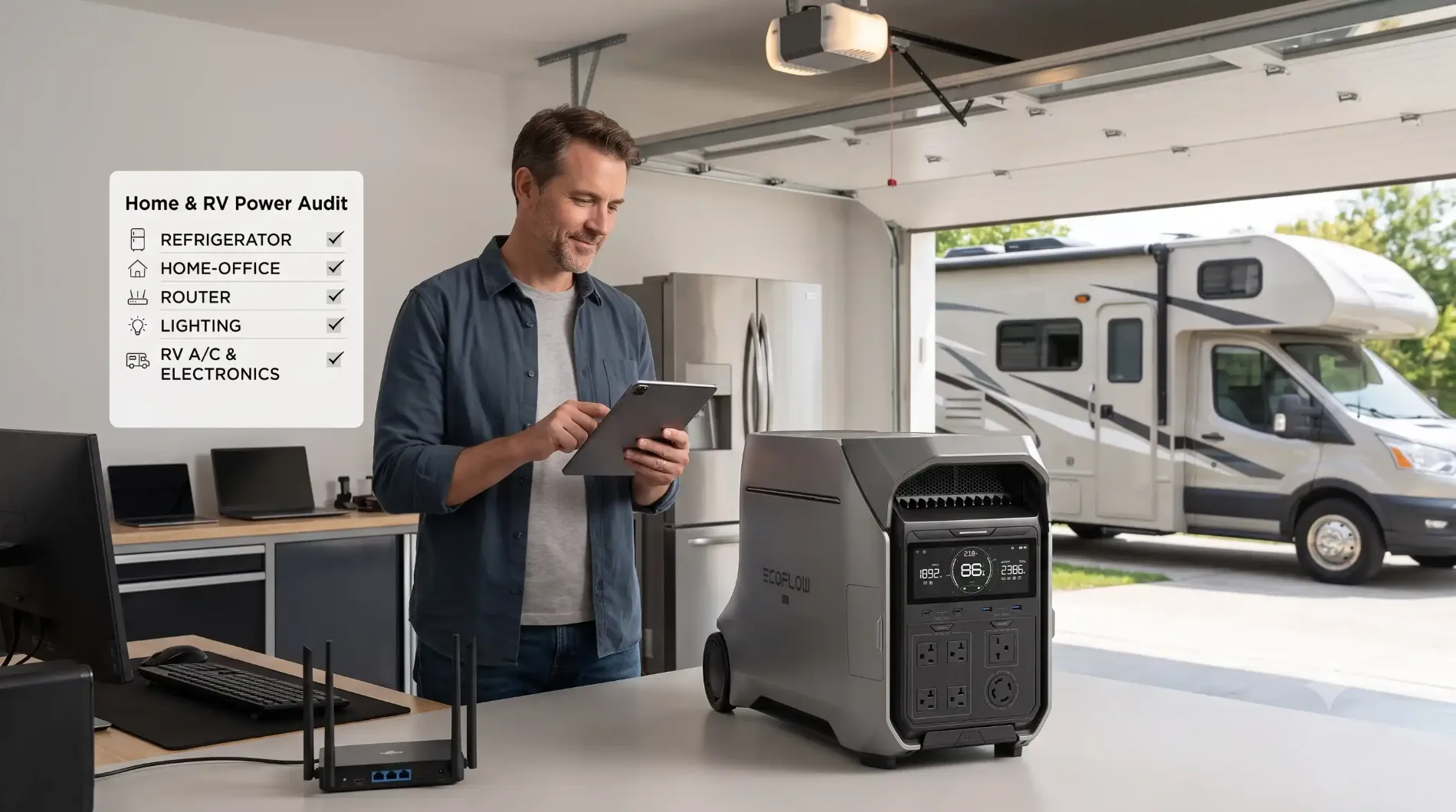
The experience becomes even better when you’ve planned your essential loads in advance.
If you know approximately how much energy your refrigerator, networking equipment, lighting, computers, and other critical devices consume, you can estimate how aggressively you can use the battery.
That turns the DELTA Pro 3 from a simple emergency device into a more predictable backup system.
The biggest mistake buyers can make is confusing inverter capacity with battery runtime.
The DELTA Pro 3 may have enough output to operate demanding appliances, but that doesn’t mean the 4,096Wh battery will run those appliances for a long time.
A 1,500W appliance, for example, can consume a substantial amount of stored energy if operated continuously. That’s why appliances such as space heaters, electric kettles, induction cooktops, and similar equipment should generally be used selectively during an outage.
The better strategy is to use the DELTA Pro 3 for essential loads continuously while treating high-wattage appliances as short-duration loads.
This approach makes the stored energy last longer and gives you much more practical backup coverage.
By this point, the strengths and compromises are fairly clear.
Most of these disadvantages are directly connected to the DELTA Pro 3’s strengths.
The large battery creates the weight. The powerful inverter and advanced charging hardware contribute to the premium price. The expandable design becomes more expensive as you add capacity.
So the real question isn’t whether these compromises exist. It’s whether the additional capability is valuable enough for your particular use.
The DELTA Pro 3 is at its best when the user actually needs serious stored electricity.
For homeowners, it can provide meaningful backup for essential household loads during outages.
For RV owners, the large battery, solar charging, and 30A output make it useful when shore power isn’t available.
For off-grid users, the combination of solar input and expandable storage provides a foundation for a larger energy system.
For casual campers, however, the story is different. If you’re mainly charging personal electronics and running a few lights, a smaller power station will probably be easier to transport and less expensive.
The DELTA Pro 3 isn’t a product where “more” automatically means “better.” Its value depends heavily on whether your power requirements justify its size and price.
The EcoFlow DELTA Pro 3 sits in the premium end of the portable power station market, so value depends heavily on what you expect from it. If you’re looking for a small emergency battery for phones and laptops, its size and price make little sense. But if you’re comparing it with a serious home backup system, RV power solution, or expandable solar battery, the picture becomes much more favorable.
What you’re really paying for is the combination of capacity and flexibility. The 4,096Wh battery gives you a substantial energy reserve, while the 4,000W inverter allows the system to handle much larger loads than compact power stations. Add 120V/240V capability, solar charging, UPS functionality, and expandable storage, and the DELTA Pro 3 becomes more than a single-purpose backup battery.
The important part is to avoid buying more capacity than you actually need. If your essential loads are relatively small, a less expensive unit may provide almost the same practical benefit.
The DELTA Pro 3 has several characteristics that make it stand out in the high-capacity category.
| Feature | Why It Matters |
|---|---|
| 4,096Wh LFP battery | Provides substantial stored energy |
| 4,000W continuous output | Handles multiple demanding loads |
| 120V/240V support | Works with a wider range of equipment |
| Up to 2,600W solar input | Suitable for serious solar charging |
| Expandable storage | Allows longer runtime as needs grow |
| UPS functionality | Useful for computers and networking equipment |
| Multiple charging options | Gives you more ways to replenish the battery |
| 5-year warranty | Adds confidence for long-term ownership |
The combination is more important than any individual specification. Many power stations can offer impressive capacity or output, but the DELTA Pro 3 brings several high-end features together in one system.
The DELTA Pro 3 is not without compromises, and these are worth considering before spending the money.
At around 113.5 pounds, the DELTA Pro 3 is heavy.
The wheels and handles make it much easier to move across a garage, driveway, RV campsite, or other relatively smooth surface, but you should not expect to carry it around like a small camping battery.
For home backup, this may not be a major issue because the unit can remain in one location most of the time. For frequent transportation, especially over stairs or uneven ground, the weight becomes much more noticeable.
A 4,096Wh battery sounds enormous until you connect a high-wattage appliance.
Devices such as electric heaters, induction cooktops, kettles, and other heating appliances can consume energy quickly. The DELTA Pro 3 can potentially operate demanding equipment thanks to its powerful inverter, but running those loads continuously can reduce battery runtime dramatically.
This is why load management matters. The system is much more useful when you prioritize essential devices and use high-power appliances selectively.
The expandable architecture is useful, but additional storage isn’t free.
If your requirements eventually grow from a few hours of backup to overnight or multi-day coverage, extra batteries can make sense. But if the base 4,096Wh capacity already covers your normal needs, buying additional storage simply because it is available may not provide enough practical benefit to justify the expense.
Before expanding, estimate your actual daily energy consumption.
California buyers should pay particular attention to availability. EcoFlow states that the DELTA Pro 3 cannot be shipped to California because it is not CARB-approved.
That means California residents should verify the current availability and regulatory status before making purchasing plans around this particular model.
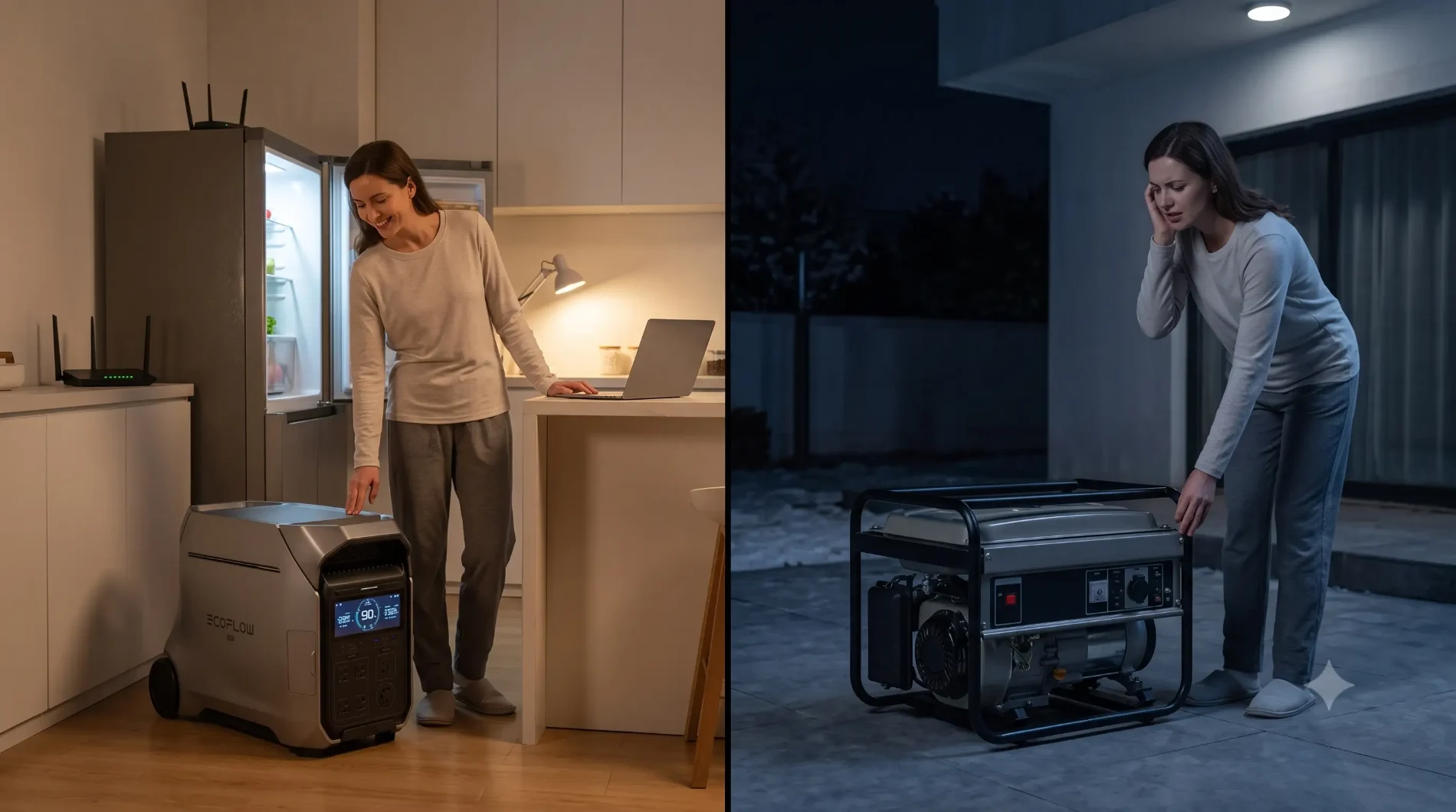
For many homeowners, the real alternative to the DELTA Pro 3 isn’t another battery. It’s a gasoline or propane generator.
The two systems solve the same basic problem in very different ways.
A conventional generator can continue producing electricity as long as you have enough fuel, making it particularly useful during very long outages. However, it also introduces engine noise, exhaust, fuel storage, maintenance, and restrictions on where it can safely operate.
The DELTA Pro 3 stores electricity instead of generating it through combustion. That means no fuel is required while it is operating, and it can be recharged from the grid, solar, or other supported sources.
For short and medium-duration outages, the battery approach can be considerably more convenient. It is also much easier to use indoors under appropriate conditions because there is no combustion exhaust.
For extremely long outages and very high continuous loads, however, a fuel generator can still have an endurance advantage.
The right choice therefore depends on your priorities. Some households may even benefit from using battery storage for everyday outages and another backup source for prolonged emergencies.
The DELTA Pro 3 makes the most sense for buyers who need high output, substantial energy storage, and flexibility.
It is particularly worth considering if you:
For these users, the DELTA Pro 3’s size and price are easier to justify because they directly contribute to the capabilities you need.
The DELTA Pro 3 is probably unnecessary if your typical requirements are limited to phones, tablets, cameras, laptops, lights, and other relatively low-power electronics.
It’s also not the best fit if lightweight portability is your top priority. A 113.5-pound power station may be manageable on wheels but is still a significant object to transport.
In those situations, a smaller power station can offer a better balance of portability, capacity, and price.
The goal shouldn’t be to buy the biggest battery you can afford. It should be to buy enough battery to comfortably handle the situations you actually expect to encounter.
The EcoFlow DELTA Pro 3 is a serious portable power station for people with serious power requirements.
Its 4,096Wh LFP battery gives it a substantial energy reserve, while the 4,000W inverter provides enough output for demanding household and recreational loads. The 120V/240V capability, high solar-input limit, UPS functionality, and expandable battery architecture further increase its usefulness.
What makes it particularly attractive is the flexibility. It can serve as a home backup battery, RV power source, or part of a larger solar-based energy system without requiring you to commit to a single use case.
But it isn’t a perfect fit for everyone.
The weight is substantial, the price is premium, and running high-wattage appliances continuously can still drain the battery faster than many buyers expect. Expanding the system can also become expensive.
For buyers who genuinely need its combination of capacity, output, solar charging, and expandability, those compromises are reasonable.
For everyone else, a smaller model may deliver better value.
The EcoFlow DELTA Pro 3 is a strong choice for serious home backup, RV, and off-grid users who need high power and substantial battery capacity.
We wouldn’t recommend buying it simply because it has bigger numbers than smaller power stations. But if your goal is to keep essential household equipment running during outages, spend longer periods away from shore power, or build a scalable battery-and-solar setup, the DELTA Pro 3 deserves serious consideration.
The bottom line is simple: buy it for the capability you need, not the capacity you may never use.
The DELTA Pro 3 has a 4,096Wh LFP battery. Actual runtime depends on the power consumption of the connected equipment and operating conditions.
The system provides up to 4,000W of continuous AC output. EcoFlow also specifies X-Boost support for compatible loads up to 6,000W and surge capability up to 8,000W.
Yes. A refrigerator is a typical example of an essential household load the DELTA Pro 3 can support. Actual runtime will vary depending on the refrigerator’s energy consumption and how often its compressor operates.
Yes. The DELTA Pro 3 supports up to 2,600W of solar input. Actual charging performance depends on the solar array and environmental conditions.
Yes. Compatible additional batteries can increase the system’s storage capacity up to 12kWh per unit configuration.
Not particularly. At approximately 113.5 pounds, it is heavy. The wheels and handles make it easier to move, but it is better suited to rolling across a suitable surface than being regularly carried.
Yes. EcoFlow specifies a UPS transfer time of up to 10ms, making it useful for compatible home-office equipment, networking hardware, and other electronics.
Yes. Its large battery, high inverter output, solar charging capability, and 30A RV connection make it a strong option for RV owners who regularly spend time away from shore power.
For users who need high output, substantial storage, solar charging, and expansion capability, yes. For basic camping or emergency charging of small electronics, a smaller and less expensive power station is likely to be the better choice.
The DELTA Pro 3 occupies a useful middle ground between a conventional portable power station and a more permanent home-energy solution. You can move it when necessary, recharge it from multiple sources, use it for serious electrical loads, and expand its storage as your needs change.
That flexibility is ultimately what makes it compelling.
If you’re preparing for serious outages, powering an RV away from hookups, or building a larger solar-backed energy system, the EcoFlow DELTA Pro 3 is a strong candidate.
If you simply need a battery for weekend camping or everyday electronics, its size and price are difficult to justify.
For the right buyer, however, the DELTA Pro 3 offers something more valuable than a long specification sheet: a practical way to bring a substantial amount of stored electricity wherever reliable power is needed.
Portable Power Station
Latest Reviews
Top Brands
Latest Comparision Reviews
Buying Guides
Important Tags
Website security powered by MilesWeb