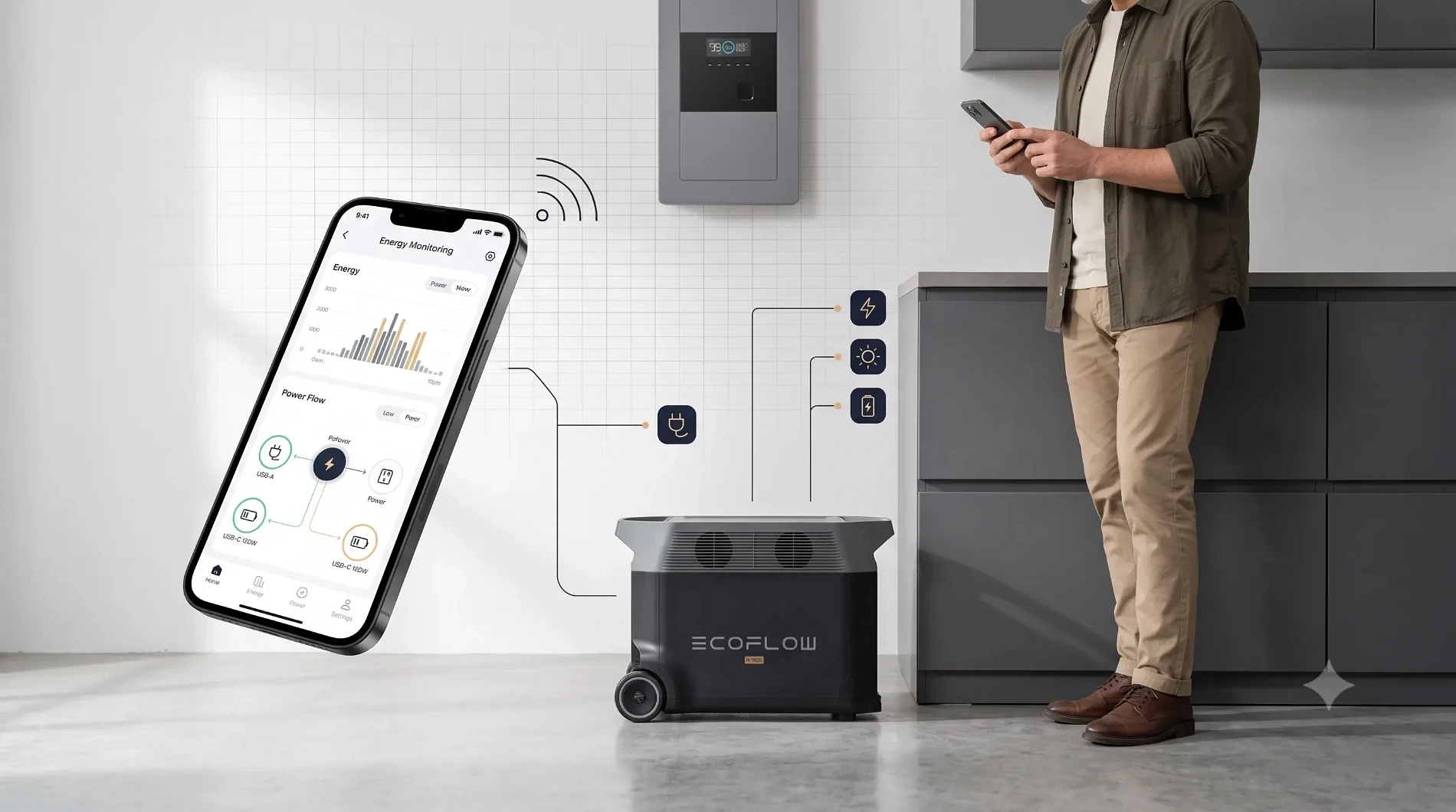
The EcoFlow DELTA Pro is a high-capacity portable power station designed for buyers who need substantially more power and battery storage than a typical portable unit can provide.
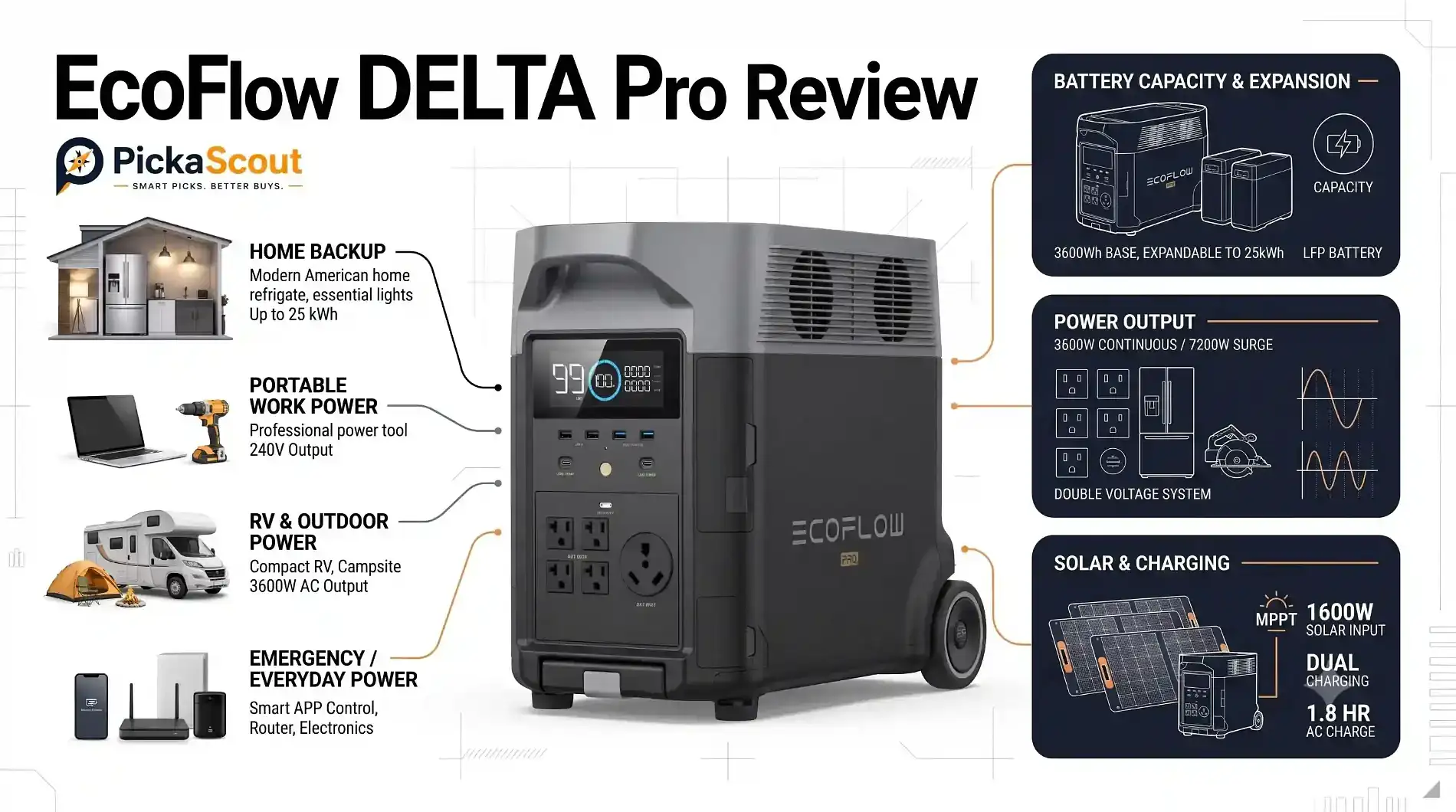
With a 3,600Wh LFP battery, 3,600W continuous AC output, up to 7,200W surge output, and up to 1,600W of solar input, the DELTA Pro is positioned for serious home backup, RV use, outdoor work and off-grid applications.
What makes it particularly interesting is that EcoFlow did not design it simply as a large battery with outlets. The DELTA Pro is part of a broader expandable energy ecosystem. A single unit can be paired with compatible expansion batteries, and the larger system can provide substantially more stored energy when configured with the appropriate accessories.
That flexibility makes the DELTA Pro suitable for different types of buyers. Someone may use one unit for emergency backup and camping today, then expand the system later as their energy requirements increase.
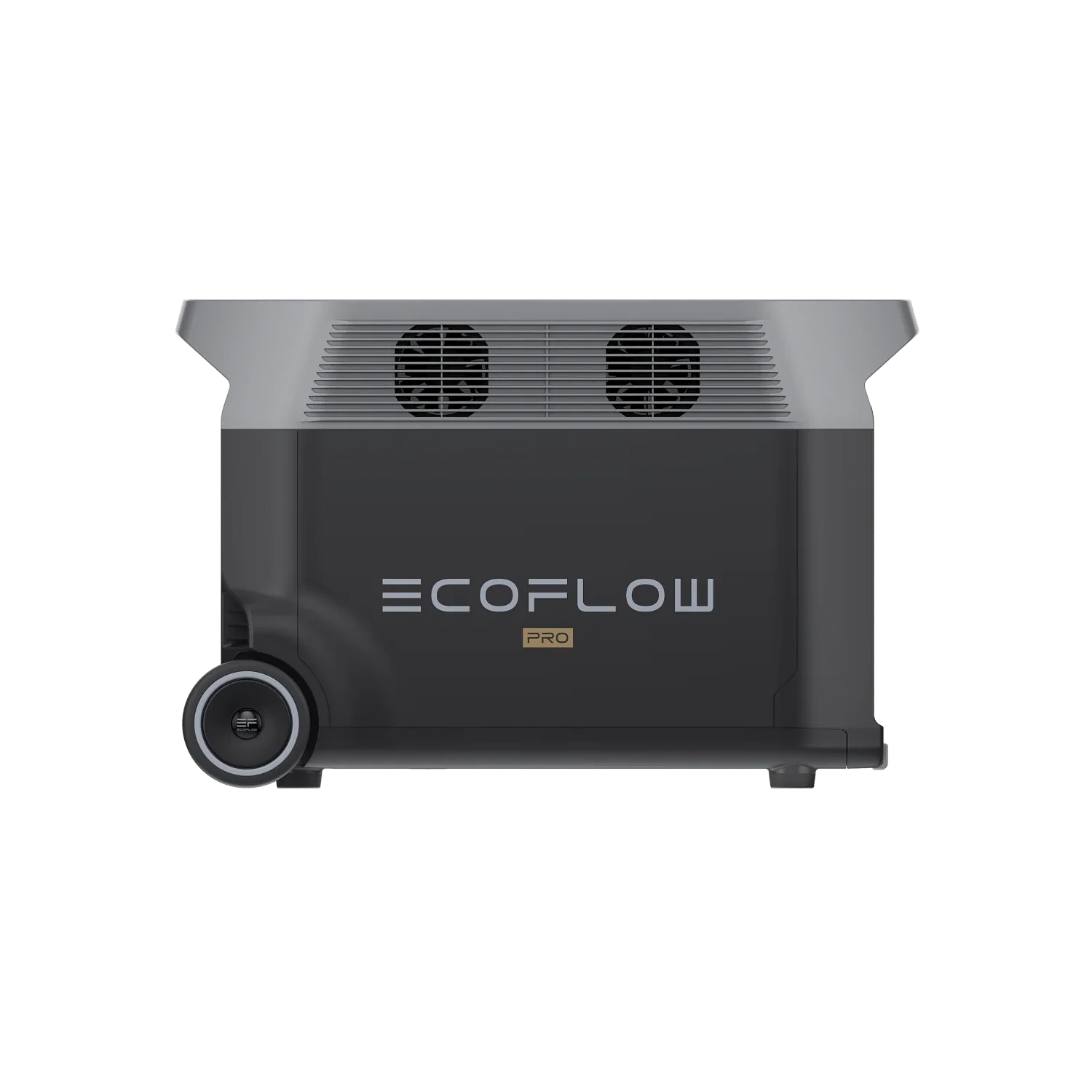
There is also a significant trade-off: the DELTA Pro weighs approximately 99 pounds. Its integrated wheels and telescoping handle make it much easier to move across a garage, driveway or campsite, but this is not a lightweight power station that you will want to carry around frequently.
So, is the DELTA Pro still worth considering?
For buyers who need high output, substantial battery capacity, solar charging and expansion capability, it remains an impressive option. But understanding where those capabilities matter—and where the unit’s size becomes a limitation—is essential before buying.
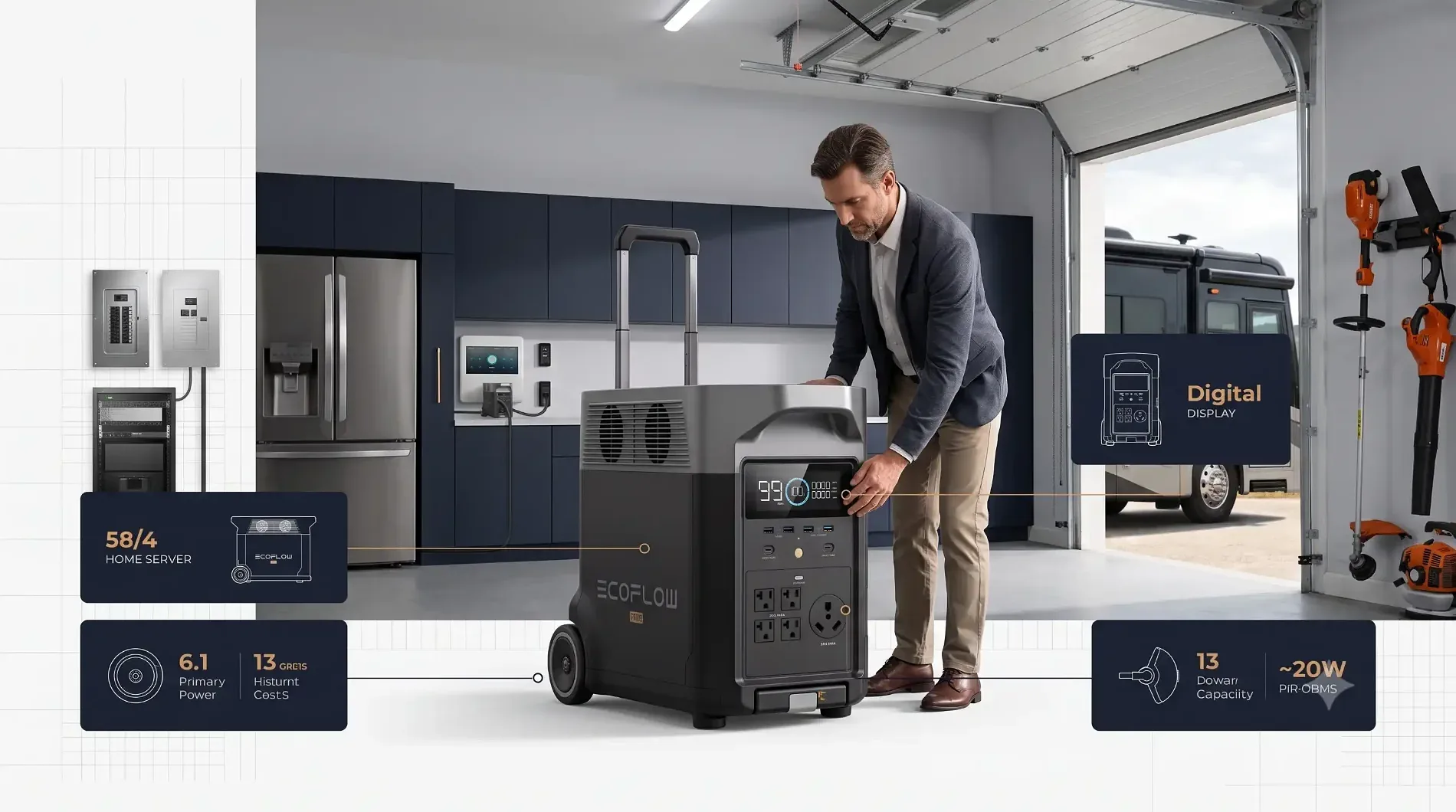
The EcoFlow DELTA Pro is a large portable power station designed to provide battery-powered electricity for demanding household appliances, electronics, tools, RV equipment and emergency backup situations.
Its foundation is a 3,600Wh lithium iron phosphate (LFP) battery paired with a 3,600W AC inverter.
These two specifications describe different capabilities.
Although portable power stations are often associated with camping, the DELTA Pro is much more capable than a basic outdoor power source.
It can be used for:
This wider range of applications is one of the reasons the DELTA Pro occupies a different category from smaller 500Wh or 1,000Wh portable power stations.
The 3,600Wh capacity represents how much energy the battery can store.
The 3,600W output represents how much power the inverter can deliver to connected AC devices under its rated operating conditions.
That combination is important.
A power station could have a large battery but a relatively weak inverter, limiting the appliances you can operate. Conversely, a powerful inverter with a small battery might run demanding equipment but only for a short period.
The DELTA Pro attempts to balance both.
| Specification | EcoFlow DELTA Pro |
|---|---|
| Battery Capacity | 3,600Wh |
| Battery Chemistry | LFP |
| Continuous AC Output | 3,600W |
| Surge Output | Up to 7,200W |
| X-Boost | Up to 4,500W |
| Solar Input | Up to 1,600W |
| AC Charging | Up to 1,800W at 120V |
| 240V Charging | Up to 3,000W |
| USB-C | 2 × 100W |
| USB-A | 4 ports |
| Car Output | 126W |
| Wi-Fi | Yes |
| Bluetooth | Yes |
| Weight | Approx. 99 lb |
| Battery Cycle Life | Up to 3,500 cycles to 80% capacity |
| Expansion | Compatible DELTA Pro Smart Extra Batteries |
The DELTA Pro’s 3,600Wh battery is one of its biggest advantages.
To understand what that means, consider the difference between energy capacity and appliance power consumption.
A device drawing 100W would theoretically consume 100Wh every hour. A 3,600Wh battery could therefore provide approximately 36 hours of energy to that device under ideal conditions.
Real-world runtime will always be lower because of inverter losses, battery management, changing appliance loads and other efficiency factors.
The actual runtime depends on the appliance.
Lower-power equipment such as a Wi-Fi router, LED lights, laptop or television can operate for considerably longer than high-wattage appliances such as electric heaters, microwaves or kettles.
Potential emergency loads include:
For home backup, the smarter strategy is usually to prioritize essential loads rather than attempting to power an entire house continuously.
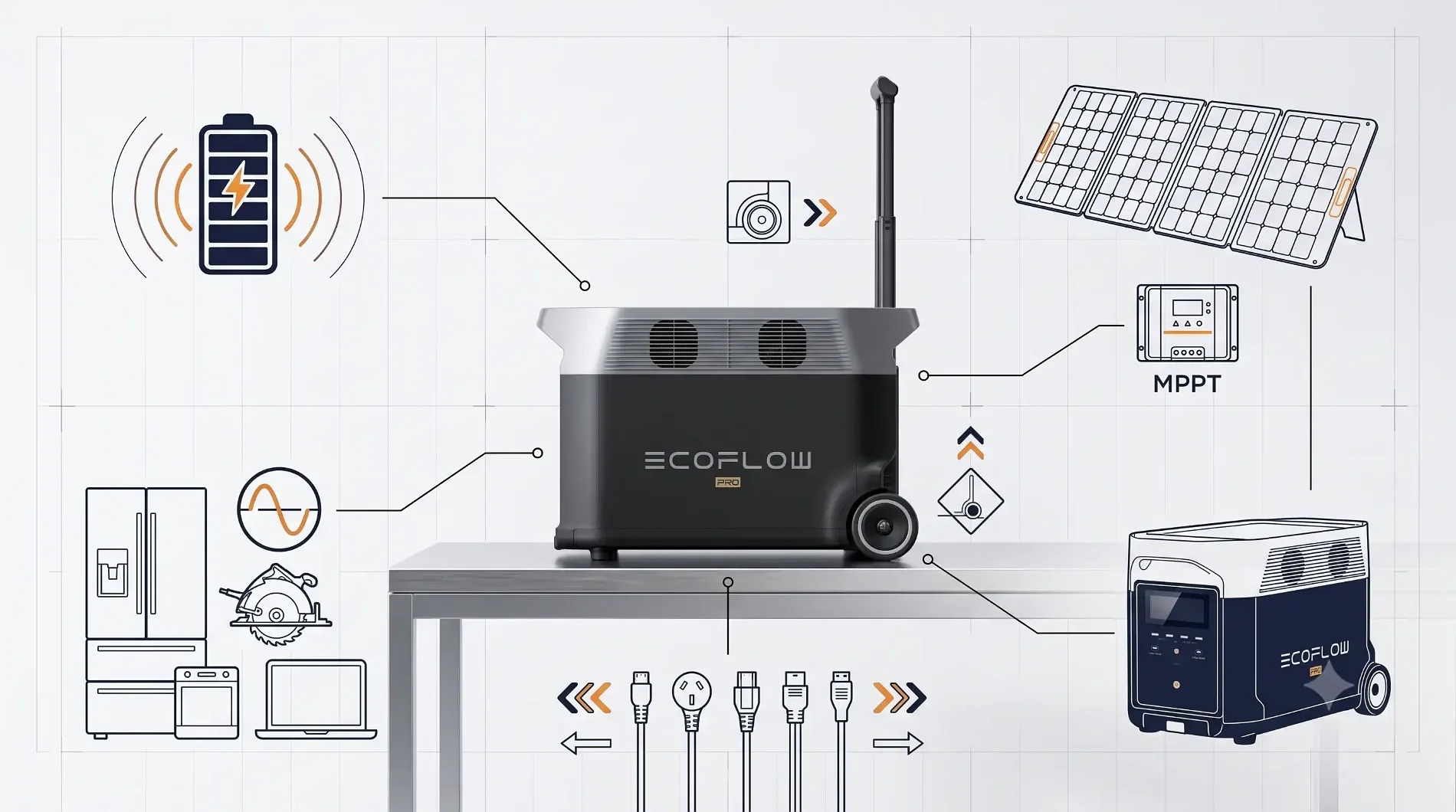
EcoFlow provides its own example runtime estimates for various appliances, including refrigerators, microwaves, kettles and ovens.
These figures are useful for understanding the DELTA Pro’s general capability, but they should not be treated as guaranteed runtime figures. Actual performance depends on the specific appliance and operating conditions.
For example, refrigerator consumption changes as its compressor cycles on and off. A microwave may consume substantially more power than its average household electronics load.
The best way to estimate your own runtime is therefore to consider the actual wattage and duty cycle of the equipment you intend to use.
The DELTA Pro uses lithium iron phosphate (LFP) battery chemistry.
For a premium power station intended for years of use, battery longevity is an important consideration.
EcoFlow rates the DELTA Pro battery for approximately 3,500 cycles before reaching 80% of its original capacity, under the company’s specified testing conditions.
LFP batteries are widely used in modern energy-storage applications because of their durability and suitability for repeated charging and discharging.
For occasional emergency use, a long cycle life can provide plenty of usable service over the product’s ownership period.
For users who regularly recharge the DELTA Pro from solar and cycle it frequently, battery durability becomes even more valuable.
Like all rechargeable batteries, the DELTA Pro’s usable capacity will gradually decline with age and cycling.
The 80% cycle-life rating does not mean the battery stops working after reaching that point. It means the battery is expected to retain approximately 80% of its original capacity under the stated testing conditions.
Actual longevity depends on factors such as usage patterns, charging habits, storage and operating temperatures.
The DELTA Pro’s 3,600W continuous AC output is what separates it from many smaller portable power stations.
It provides enough inverter capacity for a broad range of household and outdoor equipment.
Depending on their individual power requirements, the DELTA Pro can be used with equipment such as:
The total connected load still needs to remain within the system’s applicable limits.
EcoFlow lists a surge capability of up to 7,200W.
Surge power is different from continuous power.
Some appliances—particularly those with motors or compressors—can briefly require more electricity when starting than they use during normal operation.
The additional surge capability helps accommodate those short-duration demands.
This is an important distinction when comparing portable power stations.
The DELTA Pro is a 3,600W continuous-output system, not a 7,200W continuous-output system.
For everyday buying decisions, the continuous rating should therefore receive more attention than the headline surge number.
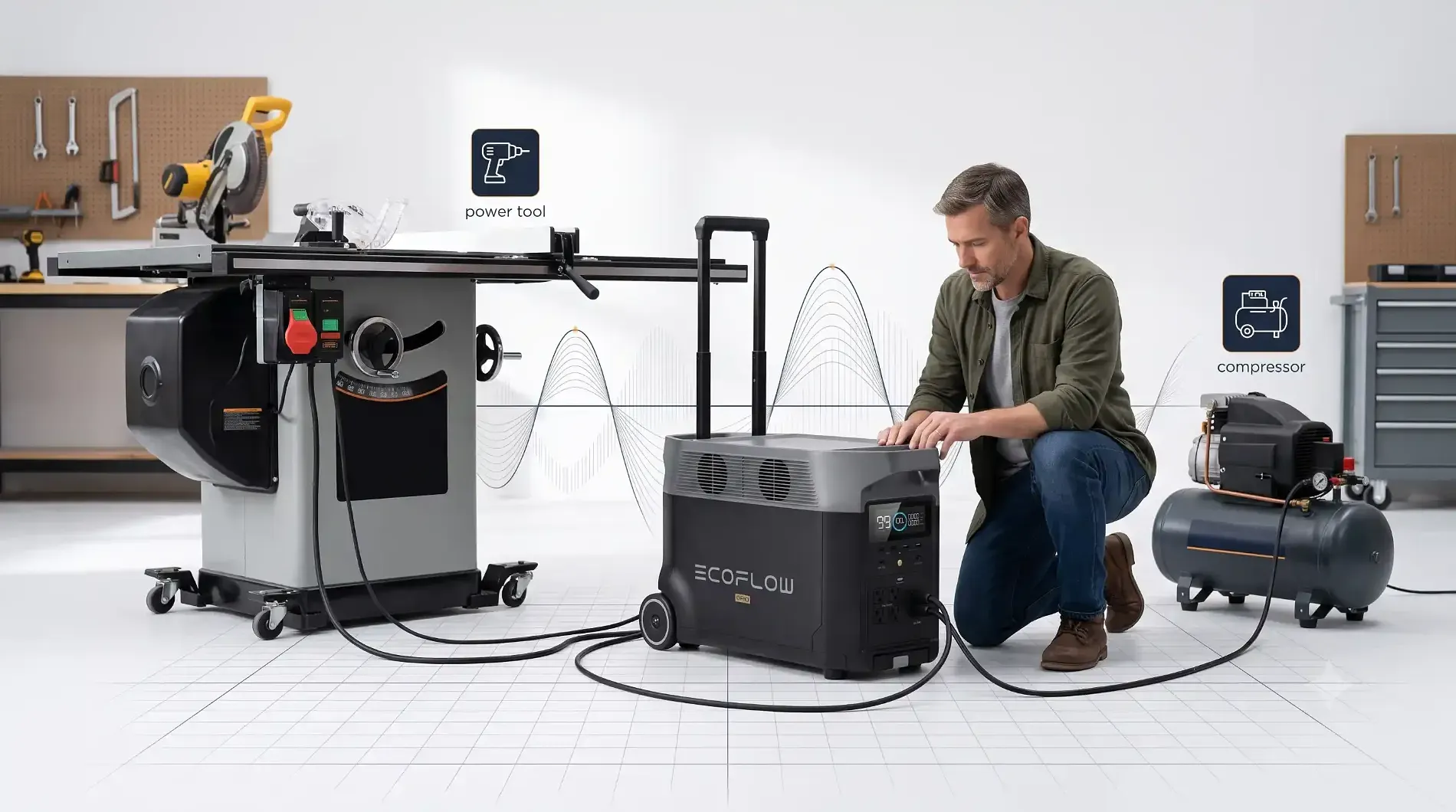
The DELTA Pro also supports EcoFlow’s X-Boost technology, which is designed to help operate certain compatible appliances rated up to 4,500W.
X-Boost is useful because some appliances have higher nominal ratings than the DELTA Pro’s standard 3,600W output.
However, X-Boost should not be interpreted as simply turning the DELTA Pro into a conventional 4,500W inverter.
Not every high-wattage appliance will behave identically when X-Boost is enabled.
The technology is designed for compatible loads, and actual results depend on the appliance.
If you are buying the DELTA Pro specifically to run one particular high-power appliance, check that appliance’s electrical requirements rather than relying only on the 4,500W X-Boost figure.
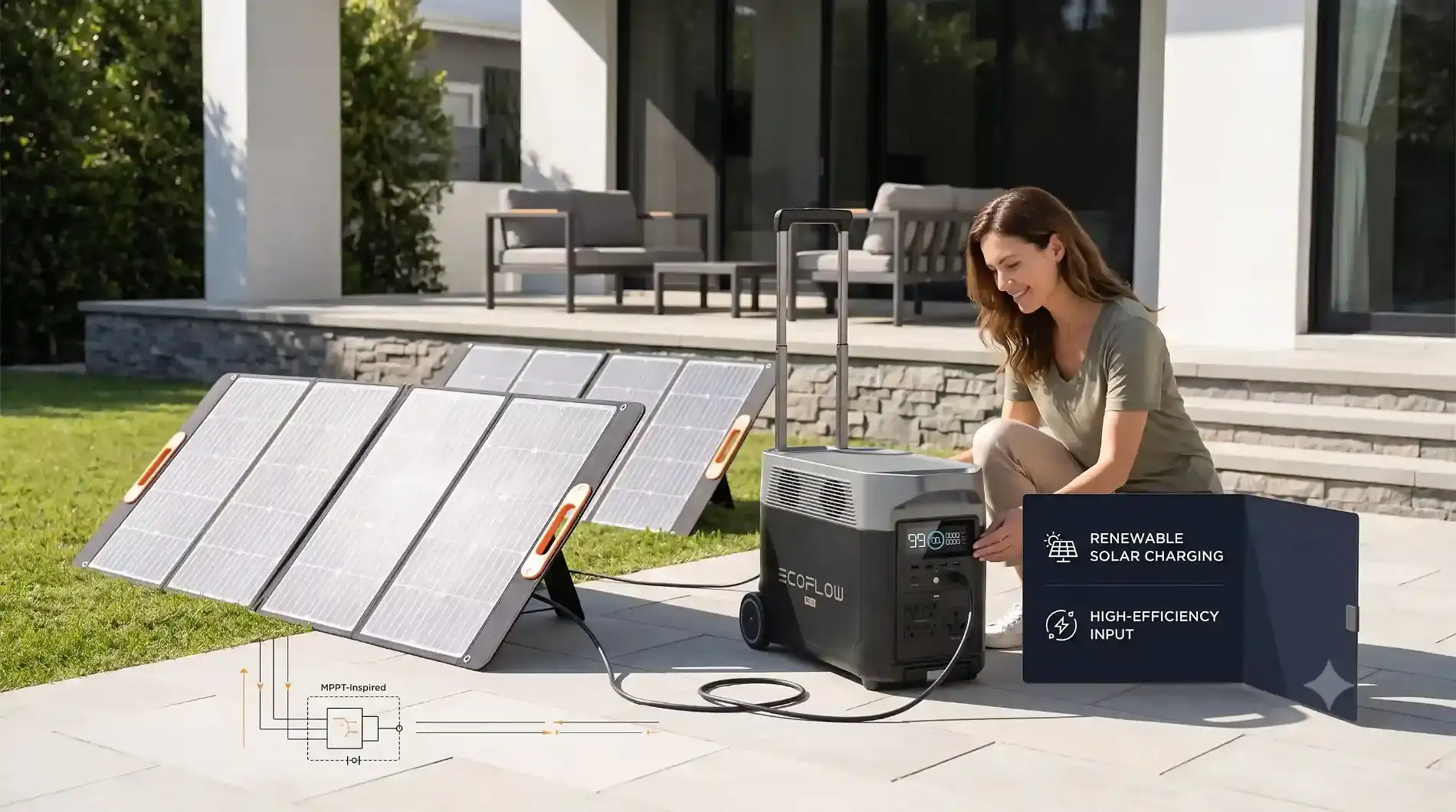
Solar charging is another major strength of the DELTA Pro.
EcoFlow rates the unit for up to 1,600W of solar input, allowing users to replenish the large internal battery using compatible solar panels.
The basic setup is straightforward:
Solar Panels → DELTA Pro → Stored Battery Energy → Appliances
This becomes particularly useful during extended outages.
If grid power is unavailable for several days, a fully charged battery eventually runs down. Solar panels can provide a renewable method of replenishing that stored energy during daylight hours.
The 1,600W rating represents the maximum supported solar input—not the amount of solar energy the DELTA Pro will necessarily receive throughout the day.
Actual solar production depends on:
A properly sized solar setup can nevertheless make the DELTA Pro considerably more useful for extended off-grid and emergency applications.
The DELTA Pro also supports high-speed AC charging.
EcoFlow lists charging of up to 1,800W through a 120V connection and up to 3,000W through a compatible 240V setup.
A large battery is only useful if you can replenish it in a reasonable amount of time.
For example, before a major storm, a homeowner may want to charge the DELTA Pro quickly while grid electricity is still available.
EcoFlow states that the DELTA Pro can recharge from 0–80% in approximately 2.7 hours at 1,800W, while a compatible 240V configuration can reduce the charging time further.
Fast charging is especially useful when:
The combination of 3,600Wh capacity and fast charging makes the DELTA Pro more practical for emergency preparedness than a large battery with very slow recharge speeds.
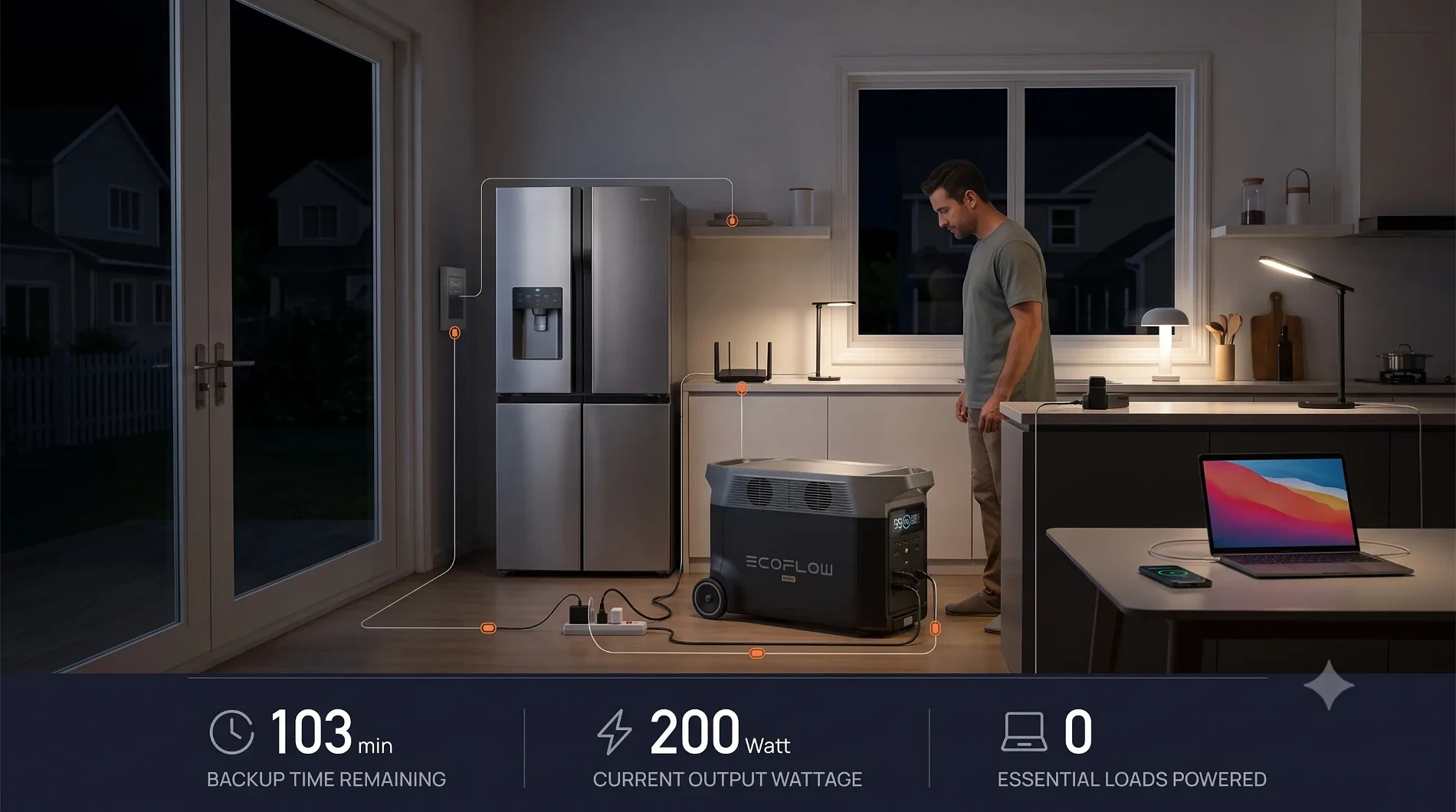
The EcoFlow DELTA Pro makes the most sense when its large battery and high inverter output are used for home backup.
A 3,600Wh battery is large enough to keep essential electronics and selected appliances running during a short outage, while the 3,600W continuous AC output gives it the ability to handle considerably heavier loads than compact portable power stations.
Instead of trying to run an entire home without limits, the practical approach is to prioritize essential equipment.
A typical backup setup could include:
The DELTA Pro’s available runtime will depend on the combined wattage and how frequently each appliance operates.
For example, a refrigerator may cycle between running and idle, while a laptop may consume considerably less power than an electric kettle or microwave. This makes actual runtime highly dependent on your household’s usage pattern.
The DELTA Pro should not automatically be viewed as a replacement for a permanently installed whole-home battery system.
Its biggest advantage is flexibility.
You can move it where power is needed, prioritize specific appliances and recharge it from AC or solar. For many households, that can be a more practical solution than attempting to keep every circuit in the home operational during an outage.
For larger backup requirements, EcoFlow’s expansion ecosystem can increase available battery capacity significantly.
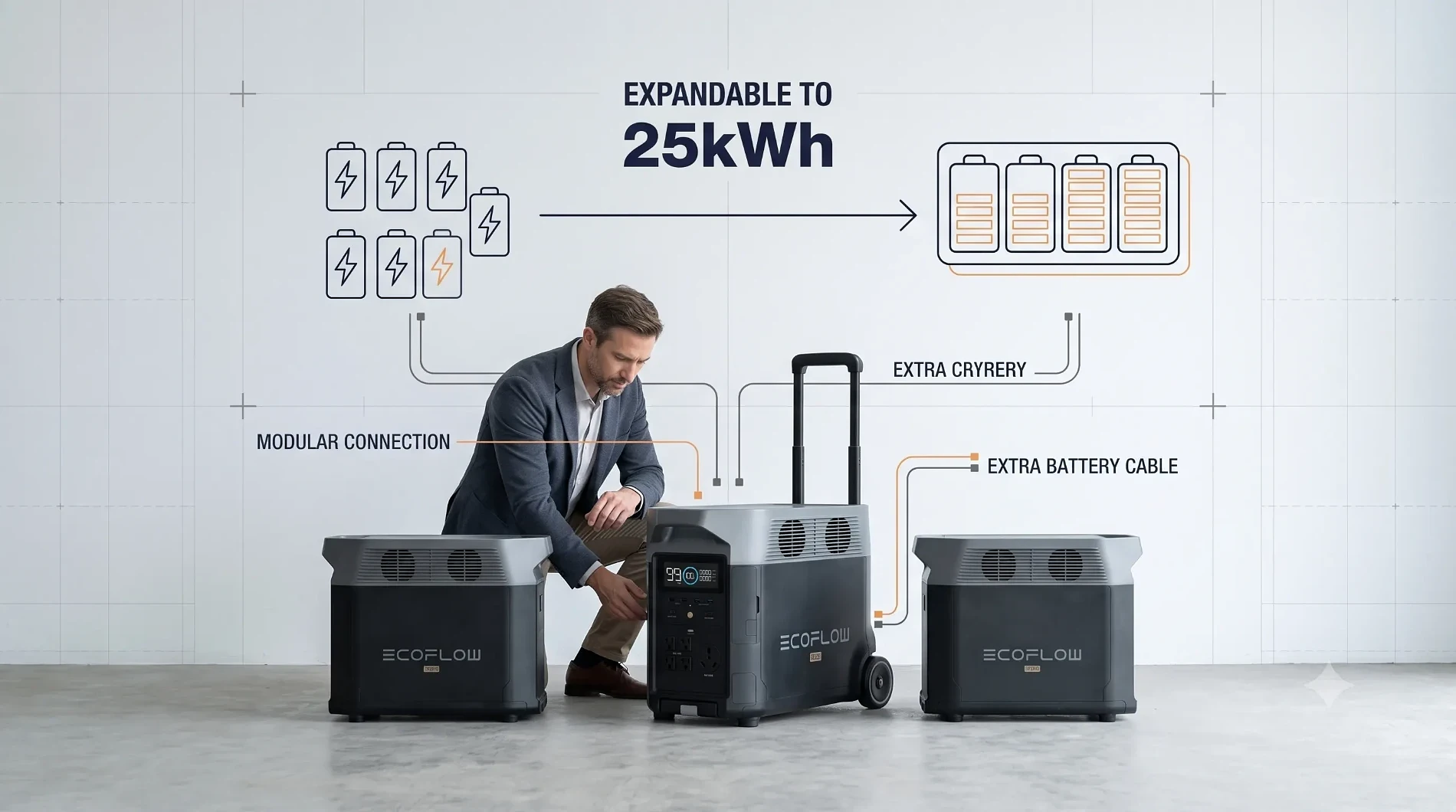
One of the DELTA Pro’s most important features is its ability to expand beyond the built-in 3,600Wh battery.
EcoFlow supports connecting DELTA Pro Smart Extra Batteries, allowing additional stored energy to be added when a single unit isn’t enough.
Consider two different buyers.
The first only needs backup power for a refrigerator, networking equipment, lights and electronics during occasional outages. A single DELTA Pro may provide enough capacity.
The second wants to operate more appliances for substantially longer periods or use the system for extended off-grid living. That buyer may benefit from adding extra battery capacity.
This makes the DELTA Pro more adaptable than a fixed-capacity power station.
Expansion also means you don’t necessarily need to purchase the largest possible setup immediately.
You can start with the main DELTA Pro and add compatible storage later if your requirements increase.
EcoFlow also markets the broader DELTA Pro ecosystem as capable of reaching up to 25kWh of storage, depending on the complete system configuration and supported components.
Despite its home-backup capabilities, the DELTA Pro is still a portable power station—and that makes it attractive for RV owners and serious campers.
The combination of high capacity and high output allows it to operate equipment that would be impractical for many smaller battery generators.
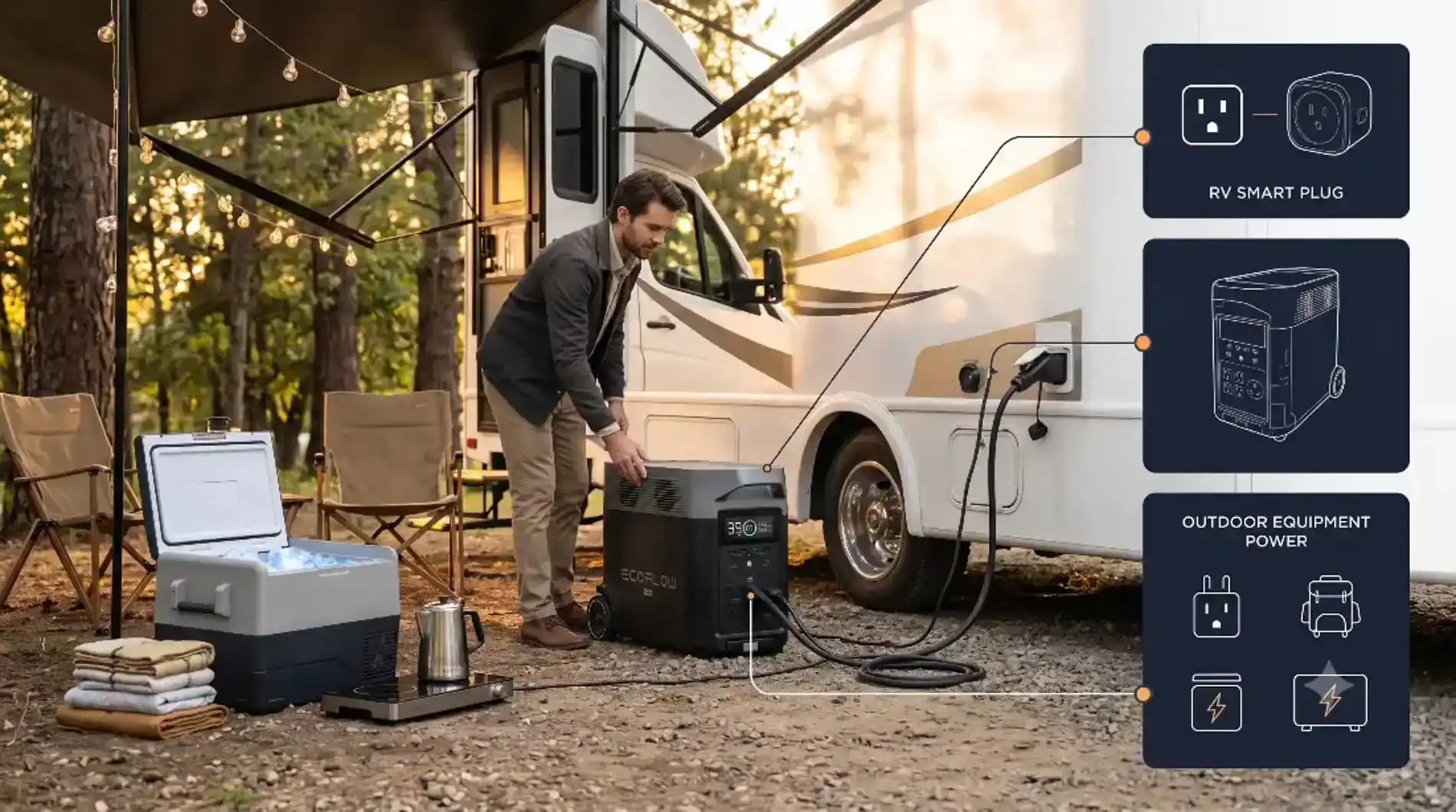
For RV use, the DELTA Pro can potentially support equipment such as:
The exact capability depends on the RV’s electrical system and the wattage of the appliances being used.
For extended trips, solar charging can also help replenish the battery during the day.
For conventional tent camping, the DELTA Pro may actually be more power station than most people need.
A smaller 1,000Wh or 2,000Wh unit can be considerably easier to transport if your main requirements are phones, lights, cameras and small electronics.
The DELTA Pro becomes more compelling for basecamp-style camping, large RVs, off-grid cabins and longer outdoor stays, where the extra capacity and inverter power have a practical purpose.
The DELTA Pro’s portability is somewhat unusual.
At approximately 99 pounds, it is heavy enough that carrying it like a traditional portable battery isn’t practical for most users.
EcoFlow addresses this with an integrated wheel-and-handle design.
The DELTA Pro can be rolled much like a piece of luggage.
That makes a major difference when moving it across:
On a flat surface, the wheels make the unit considerably easier to reposition.
The design works well when the DELTA Pro can be rolled.
It becomes less convenient when you need to:
This is therefore a portable-but-heavy power station.
For buyers who expect to frequently carry their power station by hand, the weight should be taken seriously.
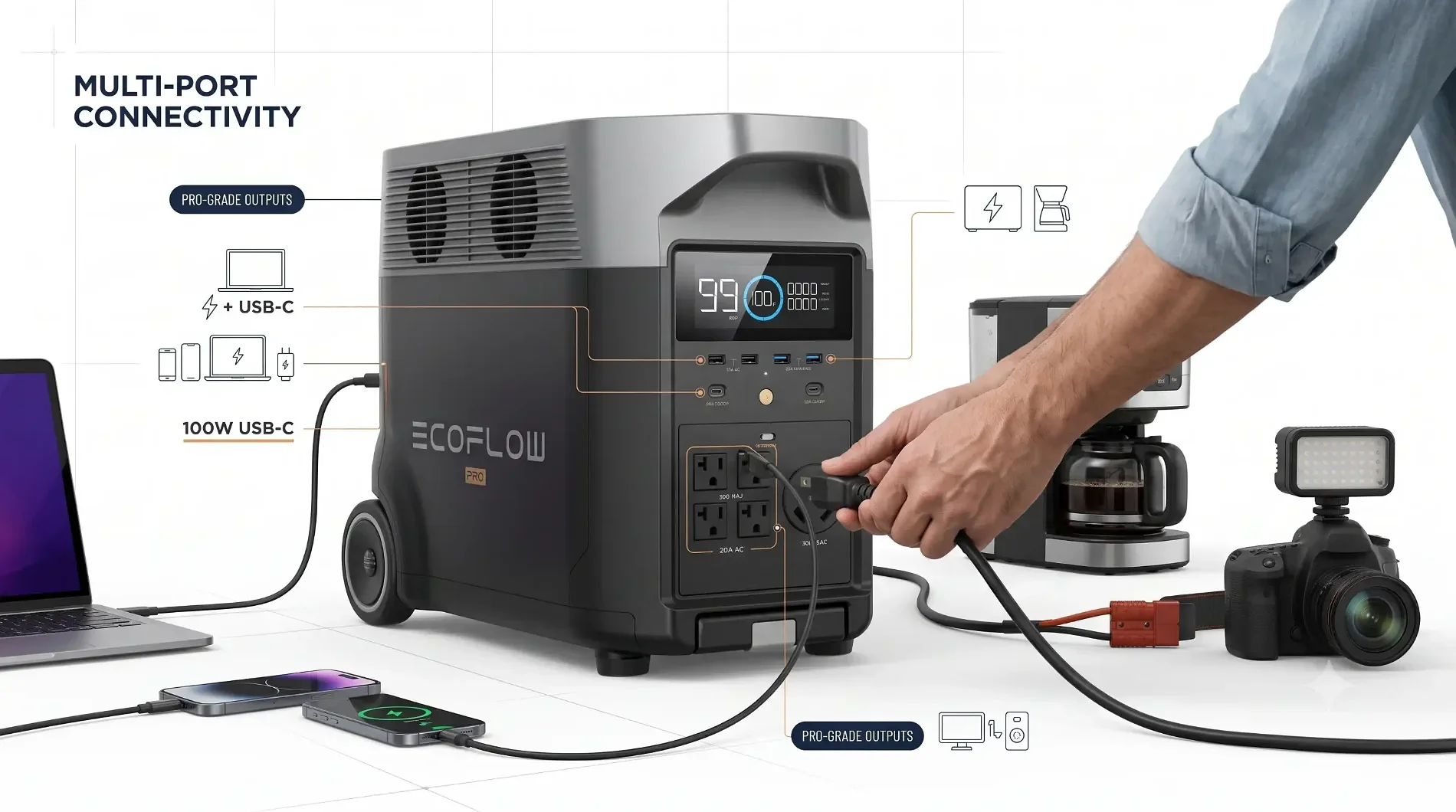
The DELTA Pro offers a broad selection of outputs, making it useful for simultaneously powering different types of equipment.
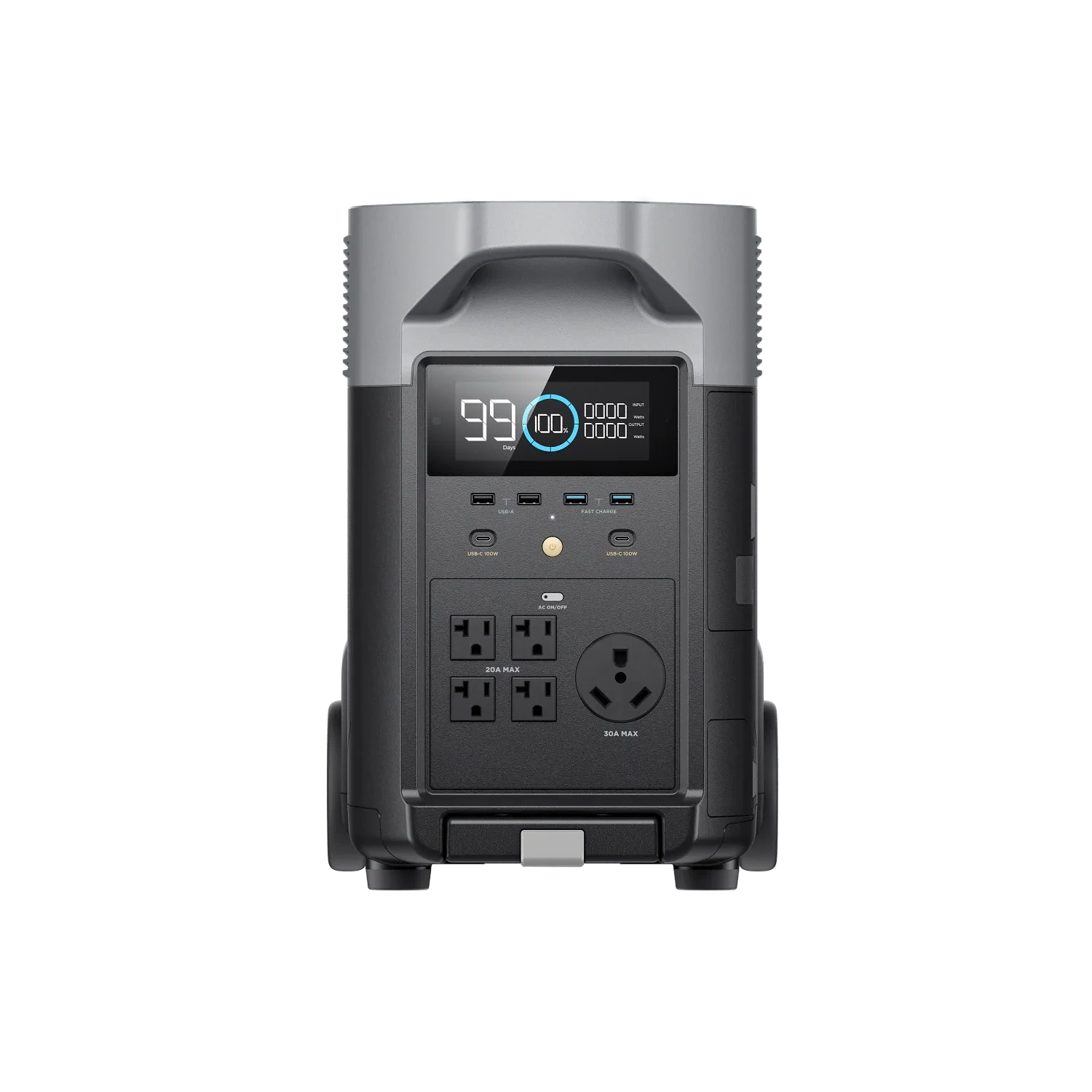
The U.S. model includes multiple AC outlets alongside USB and vehicle charging options.
The output selection includes:
This means you can power conventional household appliances while charging smaller electronics at the same time.
The 100W USB-C ports are particularly useful for modern laptops and other USB-C devices because they can deliver considerably more power than basic USB charging ports.
The DELTA Pro also supports Wi-Fi and Bluetooth connectivity, allowing users to monitor and control supported functions through EcoFlow’s companion app.
For a large power station, this is more than a convenience feature.
You can monitor battery status, power consumption and charging information without repeatedly walking over to the unit.
EcoFlow’s app integration gives the DELTA Pro a more connected experience than a traditional generator.
The app can provide information about:
This can help users understand how quickly their battery is being consumed.
During an outage, that information becomes especially useful because you can make decisions about which appliances to continue running based on the remaining energy.
Wi-Fi connectivity can also make it easier to manage the DELTA Pro without constantly interacting with the physical controls.
For home backup applications, this is a useful quality-of-life feature.
It turns the DELTA Pro from a simple battery with outlets into a more actively monitored energy system.
The high output of the DELTA Pro also makes it useful for professional and DIY applications.
A job site without convenient grid electricity can benefit from a large battery capable of running tools and charging equipment.
Depending on their individual electrical requirements, the DELTA Pro can support equipment such as:
This can be especially useful for contractors, creators and homeowners working in garages, workshops or outdoor locations.
Unlike a conventional gasoline generator, the DELTA Pro produces no direct exhaust emissions during operation.
That makes battery power particularly attractive for enclosed work areas where operating a combustion generator would be inappropriate.
The DELTA Pro’s charging options are one of its strongest practical advantages.
You can recharge it from AC power, solar panels, and compatible charging sources, depending on the configuration.
AC charging is useful when you need to prepare the battery quickly before an outage or replenish it after use.
EcoFlow’s high charging input means the large 3,600Wh battery doesn’t necessarily need to remain connected to the wall overnight every time it needs to be replenished.
Solar becomes more valuable when the grid isn’t available.
A compatible solar array can continuously replenish the battery during suitable daylight conditions, allowing the DELTA Pro to function as part of a longer-duration off-grid power setup.
This combination gives the DELTA Pro an important advantage:
AC charging provides speed, while solar provides energy independence.
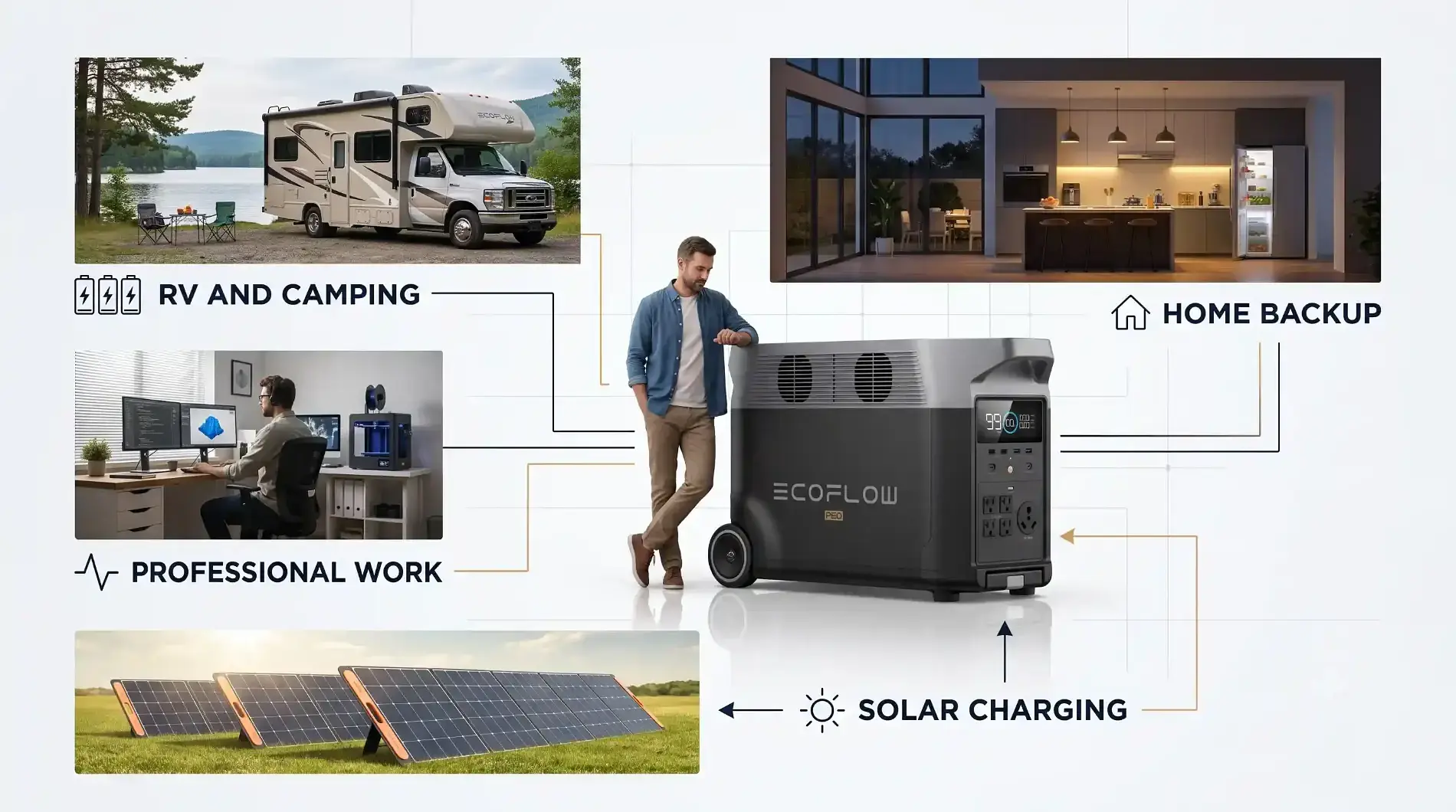
The DELTA Pro is strongest when you actually need its large capacity and high output.
It is particularly well suited to:
The DELTA Pro may be excessive for someone who only wants to charge:
For these situations, a smaller and lighter power station can be easier to transport and potentially more economical.
The DELTA Pro’s value comes from how much power and energy it can provide, not simply from being portable.
The EcoFlow DELTA Pro becomes more compelling when you look beyond its headline specifications.
Its 3,600Wh battery, 3,600W output, solar charging, expandable storage and app connectivity give it genuine versatility for home backup, RV use and demanding outdoor applications.
The biggest limitation remains its 99-pound weight. The wheels and telescoping handle solve much of the problem on smooth surfaces, but this is still a substantial machine rather than a grab-and-go battery.
For buyers who need serious portable power, that trade-off can be worthwhile.
The answer depends largely on what you expect from a portable power station.
If your goal is simply to charge phones, tablets and laptops during occasional camping trips, the DELTA Pro is probably more power than you need.
But if you need a serious backup battery capable of handling refrigerators, kitchen appliances, electronics, tools and other demanding loads, the equation changes.
Its 3,600Wh capacity gives you meaningful energy reserves, while the 3,600W inverter provides enough output for a broad range of equipment.
For emergency preparedness, the DELTA Pro is particularly appealing.
You can charge it from the grid before an expected outage, use it to operate essential appliances, and potentially recharge it using solar panels if the outage lasts longer.
That combination gives it an advantage over a conventional battery backup designed only for small electronics.
RV owners and off-grid users can also benefit from the large battery.
The ability to combine substantial storage with high AC output means you aren’t restricted to low-power electronics.
Solar charging adds another layer of flexibility for longer trips where access to grid electricity may be limited.
The DELTA Pro is a strong choice if you fall into one or more of these categories:
If you regularly use appliances or tools that require significant power, the 3,600W inverter provides useful headroom.
If you expect your energy requirements to grow, the ability to add compatible battery capacity is a major advantage.
The 1,600W solar input makes the DELTA Pro considerably more useful for extended outages and off-grid applications.
The DELTA Pro can move between home backup, RV trips, outdoor work and emergency preparedness.
The DELTA Pro isn’t automatically the right choice simply because it has bigger numbers.
At roughly 99 pounds, the DELTA Pro is not ideal if you frequently need to lift and carry your power station.
If your primary requirements are phones, tablets, cameras, lights and occasional laptop charging, you may not benefit enough from the DELTA Pro’s additional capacity and output to justify its size.
For buyers looking for a permanently installed automatic whole-home backup solution, a dedicated home battery system may be a better fit.
One of the easiest ways to understand the DELTA Pro is to compare it with the smaller power stations available today.
A compact unit may offer better portability, lower cost and enough energy for personal electronics.
The DELTA Pro takes the opposite approach.
It prioritizes:
This makes it less attractive for casual users but significantly more capable for serious backup applications.
The right choice therefore isn’t necessarily the power station with the highest specifications.
It’s the one whose capacity and output match your actual electrical requirements.
The EcoFlow DELTA Pro remains a highly capable portable power station for buyers who need serious battery capacity and substantial AC output in a movable system.
Its 3,600Wh LFP battery provides a strong energy foundation, while the 3,600W continuous inverter gives it enough power for many demanding household appliances, tools and RV equipment.
The ability to accept up to 1,600W of solar input is another major advantage, particularly for extended outages and off-grid applications. Fast AC charging also makes it practical to replenish the battery when grid power is available.
Perhaps most importantly, the DELTA Pro isn’t locked into its initial 3.6kWh configuration. Compatible expansion batteries allow users to build a larger energy-storage system as their requirements increase.
The biggest compromise is portability.
At around 99 pounds, this is a power station that you roll rather than casually carry. The wheels and telescoping handle make transportation across suitable surfaces easier, but its physical size should be considered before buying.
Overall, the DELTA Pro makes the most sense for homeowners preparing for outages, RV owners, off-grid users, serious campers and anyone who needs high-output portable power.
For someone who only needs occasional phone or laptop charging, it is excessive.
But for buyers who want a powerful, expandable and solar-capable backup system without immediately committing to a permanently installed battery, the EcoFlow DELTA Pro is a compelling option.
PickaScout Verdict: A powerful choice for serious portable and home backup power, provided you’re comfortable with its size and weight.
The DELTA Pro has a 3,600Wh battery capacity and can deliver up to 3,600W of continuous AC output. Its surge capability is rated at up to 7,200W.
Yes. Its large battery and high inverter output make it suitable for backing up essential household appliances and electronics. Larger or whole-home configurations require appropriate additional equipment and electrical setup.
Yes. EcoFlow rates the DELTA Pro for up to 1,600W of solar input with compatible solar equipment.
The DELTA Pro weighs approximately 99 pounds. Integrated wheels and a telescoping handle make it easier to move, but it remains a heavy portable power station.
Yes. The DELTA Pro supports compatible Smart Extra Batteries, allowing additional energy storage to be added to the system.
Yes. Its high output and large battery make it particularly useful for RV owners who want to operate appliances and electronics away from shore power. Solar charging can further extend its usefulness on longer trips.
For users who need high output, substantial battery capacity, solar charging and expandability, the DELTA Pro can be an excellent investment. For basic electronics and lightweight camping, a smaller power station is likely a better fit.
Yes. Its large battery, high inverter output, solar charging capability, and 30A RV connection make it a strong option for RV owners who regularly spend time away from shore power.
For users who need high output, substantial storage, solar charging, and expansion capability, yes. For basic camping or emergency charging of small electronics, a smaller and less expensive power station is likely to be the better choice.
The EcoFlow DELTA Pro isn’t designed to be the smallest or lightest portable power station.
It’s designed to provide serious amounts of stored energy and usable AC power while remaining movable and expandable.
That distinction is what makes it appealing.
If your priority is maximum portability, there are better choices. But if your priority is home backup capability, RV power, solar charging, high-wattage appliances and long-duration energy storage, the DELTA Pro offers a powerful combination that smaller units simply cannot match.
Portable Power Station
Latest Reviews
Top Brands
Latest Comparision Reviews
Buying Guides
Important Tags
Website security powered by MilesWeb